
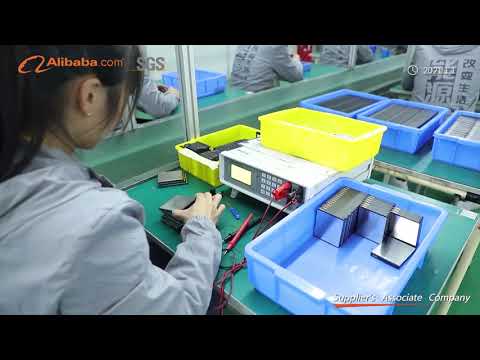

In today’s modern era, it’s known that batteries play an important role in various electronic devices, ranging from smart devices, electric vehicles, to various energy storage systems. When we talk about batteries, we’ll generally only recognize a few types with standard sizes and types that are commonly found on the market. However, there are other battery types that are often called non-standard batteries. When you hear this, maybe you’ll experience confusion and wonder; what is non standard battery?
The question what is non standard battery arises due to the number of users who are curious about what is meant by non standard battery. So, a non-standard battery is a battery type that’s known not to follow the size, shape, or even specifications of common batteries that are usually spread in the market today. Generally, this battery is specifically designed for certain needs or devices. Also, it’s known that this battery type cannot be replaced with any standard battery.
To understand more about what is non standard battery, in this article we’ll discuss it thoroughly. This article will discuss starting from what is non standard battery, characteristics, types, to pros and cons of non standard battery. By understanding in depth what is non standard battery, we can determine exactly why some devices require batteries with special specifications that cannot be replaced with any standard battery type.
What is Non Standard Battery?
What is non standard battery? Generally, a non-standard battery is a type of battery that has a unique design and shape based on a particular device. This type of battery will have some fundamental differences with the standard batteries that we generally known in the market. If the batteries that we often know have standard sizes such as AA, AAA, or some cell phone batteries that have uniform sizes and specifications and are easily found on the market, non-standard batteries are just the opposite. Non-standard batteries will generally be made specifically only for certain devices or specific needs that are unable to be met by other standard batteries.
Some applications that are known to use non-standard battery types are several portable medical devices, electric vehicles with special designs, or high-tech drones. Therefore, to meet all the demands of specially made electronic devices, the presence of non-standard batteries can be a much more specific, safe, and optimal power solution for these devices. However, because these batteries are generally designed specifically with a customization method, so when the replacement date arrives, you may incur a fairly high battery replacement cost. That’s because, this battery type is usually only produced by certain manufacturers who accept designs according to customer requests.
Non Standard Battery Characteristics
When we’re deepening our understanding of what is a non standard battery, then we need to understand the unique characteristics of this battery type. Basically, each battery type certainly has special characteristics that can help us distinguish it from other types, where this also applies to non-standard batteries. By understanding the characteristics of non-standard batteries, it will be easier for us to understand deeper about what is a non standard battery. Then, what is non standard battery characteristics? The following is a detailed explanation.
- Special Size and Shape
Unlike standard batteries that are massively made with a uniform size and design, non-standard batteries are specially made only to meet the needs of certain devices. Therefore, the shape of a non-standard battery can be much more unique, such as elongated, thin, or following the battery cover of the device to be used.
- Customized Capacity and Voltage
Besides having a different design, generally non-standard batteries also have a capacity and also a battery voltage that’s different from the standard batteries we know. This aims to adjust the energy consumption needed by the device, allowing the device to operate much more efficiently and safely.
- Unique Terminal or Connector Design
The battery connector or terminal owned by a non-standard battery will usually be different compared to the standard model. This aims to match the battery compatibility with the device, as well as prevent the battery from being used carelessly.
- Durability and High Quality
Because many non-standard batteries are made specifically for certain uses and needs, the materials and also the quality that compose these batteries are often better compared to general batteries. So, it’s no doubt that some types of non-standard batteries have a high battery life cycle or even much more stable and reliable battery performance.
- Ability to be Customized to the Environment of Use
Non-standard batteries can generally be specially designed for application in certain environmental conditions. This can make the battery last and its performance remains stable in hot, cold, or shock-resistant temperatures according to the customer’s device usage needs.
Types of Non Standard Battery
Basically, non-standard batteries come in various types which are generally specialized in certain applications. However, understanding the various non standard types can help us find out what applications generally require non standard batteries. Then, what are non-standard battery types? The following are some common types of non-standard batteries.
Custom Batteries for Medical Devices
Medical devices such as defibrillators, heart monitors, or insulin pumps generally require non-standard battery types with special designs and plans to last longer, safer, and also have a high level of compatibility with sensitive medical devices.
Non-Standard Batteries in Electric Vehicles
Certain electric vehicles are known to use non-standard battery types to customize the capacity, shape, as well as the unique and desired battery voltage. Non-standard battery types for this application will usually be specially designed to provide optimal performance and much higher battery efficiency.
Batteries for Drones and Robotics
Some intelligent devices such as drones, industrial robots, or military robotics will usually require non-standard batteries that have a lightweight, compact, and efficient design. Non-standard batteries for these applications are generally designed using lithium polymer technology or special cell combinations that have a high level of flexibility.
Batteries for Military Equipment and Heavy Industry
This non standard battery type specifically for this application will generally be designed to have a high level of resistance to extreme temperatures, shocks, and heavy terrain. Additionally, they will also be designed to provide higher and stable power for communication devices, vehicles, or field equipment.
Custom Batteries for Consumer and Specialized Gadgets
Some exclusive consumer devices such as professional cameras, gaming laptops, or even high-end audio equipment will also usually use non-standard batteries to meet their power needs and customize the design of the device accordingly.
Pros and Cons of Non Standard Battery
To understand in detail about what is non standard battery, now we’ll discuss the advantages and disadvantages of this battery type. By understanding what is non standard battery pro and con can make users and also device manufacturers determine whether this battery type is right to use or not. Therefore, the following are some of the pros and cons of non-standard batteries.
What is Non Standard Battery Pro?
Non-standard batteries have several advantages that make them very useful for certain devices. Then, what is non standard battery pro? The following is a more detailed explanation.
- Because it’s specially made, some battery parameters ranging from capacity, voltage, even to size can be adjusted to the device’s needs for more optimal performance.
- Non-standard batteries often have a higher efficiency level because they’re designed according to the device’s consumption.
- Technically, non-standard batteries have a longer lifespan because they have been customized according to the device’s usage conditions.
- Non-standard batteries are often equipped with internal protection systems such as overcharge, short-circuit, and thermal protection, making them much safer for sensitive devices.
What is Non Standard Battery Con?
Besides having advantages, this battery type also has some limitations that we certainly need to understand. Then, what is non standard battery cons? The following is a complete discussion.
- Because they’re made specifically for certain devices and needs, the price of non-standard batteries is known to be more expensive than standard batteries.
- This battery type will be difficult to find on the market freely because it has a unique design.
- With the unique design that this type of battery has, it makes it difficult to be replaced carelessly.
- Because it’s difficult to find in the market freely, users will depend on batteries from certain manufacturers, so it can limit the user’s battery selection.
TYCORUN OEM/ ODM Customization Non Standard Battery Product
As a lithium battery factory widely known for its reliable battery performance and durability, TYCORUN’s one of the battery manufacturers that offers OEM/ ODM customization services. TYCORUN, which has been engaged in battery research and development for more than 17 years, is ready to assist you in meeting all your specific energy needs!
TYCORUN’s battery OEM/ODM services are known to offer a wide range of flexibility tailored to the interests and needs of users. TYCORUN’s OEM service allows you to provide input on the design, logo, battery management software, and additional protection systems that the battery requires. As for ODM service, we’ll welcome you to work directly with our company’s top engineering team to design unique and innovative battery solutions according to your interests and preferences.
Therefore, if you’re interested in the OEM/ODM services we offer, or you need any other assistance in choosing the right battery solution, we’re ready to help you wholeheartedly. Then, for more information about our OEM/ODM services or to get started on a customization project, you can contact us here!
Conclusion
So, what is a non standard battery? Technically, a non-standard battery is a battery type that is customized in terms of size, capacity, and unique terminal design to fit the specific needs of a particular device. With these special characteristics, non standard batteries offer various advantages and reliability for devices that have different battery designs. So, with the presence of non-standard batteries, it can make devices that require different power and design can still function optimally without problems.
Frequently asked questions
Yes, it's because most non-standard batteries are equipped with additional protections to keep them safe.
Usually non-standard batteries cannot be replaced with standard batteries. This is due to the unique design, size, and battery capacity of non standard batteries, so replacing them with standard batteries can potentially damage the device or even degrade its performance.
Basically, the non standard battery life will vary depending on the cell technology, capacity, and also how it's used. Some batteries are known to last for several years under normal use.
Who We Are
With over 17 years of experience, TYCORUN is a leading lithium battery supplier committed to driving innovation and development of battery technology. Our diverse product range includes two/three/four-wheeled power batteries, energy storage systems, one stop battery swap systems, inverters, and electric motorcycles. These high-quality solutions are trusted in Europe, the Middle East, and Africa.
We provide customized battery services, from cells to complete systems, and holds certifications like ISO9001, CE, TUV, and UL. TYCORUN has developed solid-state batteries for better performance and uses advanced BMS algorithms for safety and longer life.Â
TYCORUN’s global reach is strengthened through our strategic partnership with Ganfeng, a top-five Chinese battery manufacturer. This collaboration offers us professional technology and production support. We fully manage Ganfeng’s overseas battery business and have collaborated to mass sell swappable, power, and energy storage batteries to Thailand, Dubai, Egypt, South Africa, Saudi Arabia, etc.

To understand more about what is a non-rechargeable battery, in this article we’ll explore it thoroughly. This article will discuss more deeply starting from a general understanding of what is a non-rechargeable battery, its types, how it works, to the pros and cons of this battery type.

In this article, we’ll take a comprehensive look at what is energy management system, from how it works, key features and tools, to the benefits and challenges of this technology.

In this article, we’ll explore more about what battery fluid is, its types, how to maintain it, as well as the impact if the battery lacks or has excess fluid.
Authors
-
View all posts
Anastasia is a dedicated renewable energy researcher and technical writer specializing in inverters, home energy storage solutions, and clean energy trends. With a sharp eye for market analysis and industry shifts, she transforms complex technical concepts into actionable, easy-to-understand insights. Her goal is to empower homeowners and businesses alike to make highly informed decisions regarding sustainable energy deployment.
-
View all posts
Meg is a battery engineer with 10+ years of experience in the energy storage industry. She holds a B.S. in Electrical Engineering and previously worked as an R&D engineer at a lithium-ion battery manufacturer, where she focused on battery management systems (BMS), charging algorithms, and life-cycle testing for lead-acid, AGM, and lithium chemistries. She has contributed to the development of battery maintenance technologies used in commercial products. Meg now provides technical review for energy storage content to ensure accuracy, safety, and practical value for readers.





