Skip to content



UN38.3 covers transport-related testing for applicable lithium cells and batteries, IEC 62133-2 covers the safety of portable sealed secondary lithium cells and batteries, and CE marking indicates conformity with applicable EU legislation. These serve different compliance purposes and should not be treated as interchangeable requirements. [1][3][4]
If you are buying, shipping, exporting, or importing a lithium battery, start with the exact battery, destination, application, and transport mode. Then identify the requirements that apply and confirm that the supporting documents match the battery you are purchasing.
This guide explains UN38.3, IEC 62133-2, and CE marking as part of the lithium battery certification and compliance process, what a UN38.3 Test Summary contains, and how to verify the documents needed for shipping and import.
Key Takeaways
- UN38.3 addresses transport testing for applicable lithium cells and batteries, while IEC 62133-2 addresses portable lithium battery safety and CE marking addresses applicable EU conformity requirements.
- A UN38.3 Test Summary records key information about the tested battery, including its manufacturer, model, laboratory, report identification, and test results.
- CE marking is a conformity marking, not a universal battery safety certificate.
- Before buying, shipping, or importing a lithium battery, verify the exact model, applicable requirements, supporting documents, and destination-specific rules.


What's the Difference Between UN38.3, IEC 62133-2, and CE Marking?
The three address different parts of lithium battery compliance:
| Requirement | Main purpose | What it addresses | What it does not replace |
|---|---|---|---|
| UN38.3 | Transport testing | Applicable lithium cell or battery transport tests | EU market conformity or product-safety requirements |
| IEC 62133-2 | Product safety | Safe operation of portable sealed secondary lithium cells and batteries | Transport requirements such as UN38.3 |
| CE marking | EU conformity | Conformity with applicable EU legislation | Transport testing or destination-specific shipping rules |
UN38.3 is part of the UN dangerous-goods transport framework. IEC 62133-2 is a product-safety standard for portable sealed secondary lithium cells and batteries. Under Regulation (EU) 2023/1542, CE marking forms part of the conformity process for batteries within the regulation’s scope.[1][4][8]
The practical point is simple: meeting one does not automatically establish compliance with the others.
What Are the Lithium Battery Shipping Requirements Under UN38.3?
Applicable lithium cells and batteries are subject to the relevant UN38.3 testing requirements for transport. The current UNECE material is Revision 8 (2023) with Amendment 1 (2025), which includes changes to subsection 38.3 addressing lithium cells and batteries. [1]

What Does UN38.3 Test?
UN38.3 specifies eight test methods:
- T.1 — Altitude simulation
- T.2 — Thermal test
- T.3 — Vibration
- T.4 — Shock
- T.5 — External short circuit
- T.6 — Impact
- T.7 — Overcharge
- T.8 — Forced discharge
These tests address pressure, temperature, vibration, mechanical shock, electrical short circuit, impact, overcharge, and forced discharge conditions. [1]
UN38.3 testing is only one part of the shipping process. A shipment must also meet the applicable requirements for classification, packaging, marking, labeling, documentation, and the selected transport mode.
Another relevant standard is IEC 62281:2019, as amended by A1:2021 and A2:2023, which specifies test methods and requirements for the safe transport of primary and secondary lithium cells and batteries. IEC also notes that this standard contains important deviations from the UN Manual of Tests and Criteria, so it should not be treated as interchangeable with UN38.3 or as a substitute for applicable transport regulations. [6]
For air transport, the current IATA guidance also applies additional operational requirements. For example, standalone UN3480 lithium-ion batteries under PI965 must generally be offered at a state of charge (SoC) not exceeding 30%, unless the applicable approval route applies. Batteries packed with or contained in equipment follow different provisions. [3]
“UN38.3 compliant” does not by itself mean that the complete shipment is compliant. The applicable transport rules still have to be checked for the specific shipment.
What Is a UN38.3 Test Summary for Lithium-Ion Batteries?
A UN38.3 Test Summary records the testing information for the relevant lithium cell or battery. It is a compliance document showing the information needed to verify the applicable transport testing.
The required information includes the manufacturer and contact details, testing laboratory, unique report identification number, report date, battery description, model numbers, watt-hour rating or lithium content, tests and results, applicable Manual revision, and the signature with the name and title of the responsible person/signatory, or a unique identifier of the responsible person. [1][3]
What Should You Check on a UN38.3 Test Summary?
Before accepting a supplier’s document, check:
- Manufacturer — Does the company name and contact information match the product documentation?
- Model — Does the exact battery model match the product you are buying?
- Laboratory — Is the testing laboratory and its contact information identified?
- Report ID — Is a unique test report identification number provided?
- Date and standard reference — Is the test date and applicable UN Manual revision clear?
- Battery details — Do the description, mass, watt-hour rating, lithium content, and model information match the product?
- Test results — Are the mandatory tests and their pass/fail results identified?
- Authorized person → Responsible person — Does the document identify the responsible person by name and title?
The exact model match is one of the most important checks. A document covering a different battery design does not by itself establish compliance for the product you are purchasing.
For applicable cells and batteries covered by the transport rules, manufacturers and subsequent distributors are required to make the test summary available so that consignors and other relevant supply-chain participants can confirm compliance. [2]
It may be made available electronically rather than as a paper document inside every shipment. [2][3]
What Does IEC 62133-2 Cover for Lithium-Ion Battery Safety?
IEC 62133-2:2017+A1:2021 specifies requirements and tests for the safe operation of portable sealed secondary lithium cells and batteries under intended use and reasonably foreseeable misuse. [4]
The standard is specifically scoped to portable applications. It should not be treated as a universal safety standard for every type of lithium battery.
For industrial applications, including stationary applications such as telecom, UPS, and electrical energy storage systems, IEC 62619:2022 specifies safety requirements and tests for secondary lithium cells and batteries within its scope. It also covers certain motive applications, while road vehicles are excluded from its scope. [5]

Is IEC 62133-2 the Same as UN38.3?
No. UN38.3 covers lithium battery testing relevant to transport, while IEC 62133-2 covers the safety of portable sealed secondary lithium cells and batteries. A battery may need evidence for both purposes when the applicable requirements call for it. [1][4]
IEC 62133-2 documentation should therefore not be used as a substitute for a UN38.3 Test Summary when transport compliance requires the latter.
What Does CE Marking Mean for Lithium Batteries in the EU?
CE marking indicates that the manufacturer declares conformity with the applicable EU requirements and has completed the relevant conformity-assessment process. It is not a generic battery safety certificate issued by an EU authority. [7][8]
For batteries within the scope of Regulation (EU) 2023/1542, the manufacturer must complete the relevant conformity assessment, prepare the required technical documentation and EU Declaration of Conformity, and affix the CE marking when the applicable requirements have been met. [8]
The regulation applies from 18 February 2024. Article 17 and Chapter VI apply from 18 August 2024, except for Article 17(2), which applies later according to the timing specified in Article 96. Article 17 covers conformity assessment procedures, while Chapter VI sets out obligations for economic operators such as manufacturers and importers. [8]
For an importer, the important distinction is that CE marking is evidence of EU conformity, not proof of UN38.3 transport testing.

What Documents Do Importers Need for Lithium Battery Import Compliance?
There is no single worldwide “battery certificate for customs.” Import requirements depend on the destination country, battery type, intended use, transport mode, and the importer’s role.
For batteries placed on the EU market, Regulation (EU) 2023/1542 requires importers to verify that the EU Declaration of Conformity and technical documentation have been drawn up, the relevant conformity assessment has been carried out, the CE marking is present, and the required documents, instructions, safety information, and markings are available. [8]
For international shipments, also check the applicable transport documents and any additional destination-specific import requirements.
What Should You Request From Your Battery Supplier?
| Document or Evidence | What to Verify |
|---|---|
| UN38.3 Test Summary | Model, manufacturer, laboratory, report ID, test date, test results |
| IEC 62133-2 evidence | Standard/version, product or battery model, scope |
| EU Declaration of Conformity | Product identification and applicable EU legislation |
| Technical documentation | Evidence supporting the applicable conformity assessment |
| SDS | Product identity and relevant safety information |
| Product specification sheet | Voltage, capacity, chemistry, dimensions, product identifiers |
| Shipping documentation | Classification, packaging, marking, labeling, transport-mode requirements |
Not every document applies to every battery or shipment. The final document set should be determined by the product, destination, market, and transport mode.
How Do You Verify Lithium Battery Compliance Before Shipping or Importing?
Use this seven-step check:
- Identify the exact battery.
Record the manufacturer, model number, chemistry, capacity, and whether the product is a cell, battery, or battery pack.
- Identify the shipment.
Confirm the transport mode and whether the battery is shipped alone, packed with equipment, or contained in equipment.
- Match the UN38.3 document.
Check the model, manufacturer, report identification, battery description, and test results against the actual product.
- Check the applicable safety requirement.
Determine whether IEC 62133-2 or another product-safety standard applies to the battery and market.
- Check EU conformity when applicable.
Verify the applicable conformity assessment, EU Declaration of Conformity, CE marking, and required labeling under Regulation (EU) 2023/1542.
- Check import requirements.
Confirm additional customs, registration, labeling, product, or transport requirements for the destination.
- Check consistency across documents.
The model number, manufacturer, and battery characteristics should be consistent across the documentation, while the cited standards should be appropriate to the specific document and requirement.
Common Lithium Battery Compliance Mistakes
- Treating UN38.3, IEC 62133-2, and CE as interchangeable.
Each addresses a different compliance purpose. - Accepting a UN38.3 document for the wrong model.
A supplier document should correspond to the battery being purchased. - Using IEC 62133-2 as transport evidence.
Product-safety evidence does not replace applicable UN38.3 transport requirements. - Treating CE marking as a safety certificate.
CE marking indicates conformity with applicable EU legislation; it is not a universal certificate issued by an EU authority. - Requesting only a certificate and ignoring supporting documents.
Depending on the shipment and market, buyers may also need a Test Summary, EU Declaration of Conformity, technical documentation, SDS, product specifications, and shipping documents. - Checking documents without checking the shipment.
Transport mode, packaging, classification, labeling, and destination rules can change the applicable requirements. - Assuming “certified” means every requirement is covered.
The exact document, battery model, application, market, and shipment still need to be matched.

A Practical Supplier Verification Example
Suppose an importer is buying a 12V 100Ah LiFePO₄ battery from an overseas supplier for the EU market.
Start with the UN38.3 Test Summary and confirm that its model number and manufacturer match the battery being purchased. Then check the applicable EU conformity documentation and CE marking under Regulation (EU) 2023/1542.
At 12V nominal, a 100Ah battery has a nominal energy rating of about 1,200Wh, so its transport classification and packing requirements should be assessed from the actual shipment configuration and transport mode rather than from the voltage and capacity labels alone.
If the battery is shipped separately by air as a standalone UN3480 lithium-ion battery, also check the applicable IATA requirements, including the 30% maximum state-of-charge rule under PI965 unless the specified approval route applies. [3]
The practical distinction is that transport compliance, product safety, and EU market conformity are separate checks.
Frequently Asked Questions
UN38.3 refers to the transport testing requirements for applicable lithium cells and batteries under subsection 38.3 of the UN Manual of Tests and Criteria. It is separate from product-safety and EU market-conformity requirements. [1]
No. IEC 62133-2 addresses portable lithium-ion battery safety, while UN38.3 addresses testing relevant to lithium battery transport. They serve different purposes. [1][4]
No. CE marking addresses applicable EU conformity requirements, while UN38.3 addresses transport testing. A CE-marked battery can still require separate transport documentation. [7]
Request the documents that apply to the exact product and destination, such as a UN38.3 Test Summary, relevant safety evidence, EU Declaration of Conformity where applicable, product specifications, SDS, and shipping documents. Verify that the documents identify the same battery model you are purchasing.
Conclusion
Start with the exact battery and destination, then determine the requirements that apply to the market and shipment. For transport, check UN38.3 testing and the applicable transport rules. For portable battery safety, check the relevant safety standard such as IEC 62133-2. For the EU market, check the applicable conformity assessment, EU Declaration of Conformity, CE marking, and labeling requirements under Regulation (EU) 2023/1542.
Before shipping or importing, match every compliance document to the exact battery model and confirm the requirements for the intended market and transport mode. A single certificate, Test Summary, or marking should not be treated as proof that every other requirement has been met.
Sources
[1] UNECE (2025). UN Manual of Tests and Criteria Rev.8 (2023) and Amendment 1 (2025). Available at:
https://unece.org/transport/dangerous-goods/rev8-files
[2] UNECE (2025). UN Model Regulations, Volume I. Available at:
https://unece.org/sites/default/files/2025-09/ST_SG_AC10_1_Rev24e_Vol%20I.pdf
[3] IATA (2026). Battery Guidance Document — Revised for the 2026 Regulations. Available at:
https://www.iata.org/contentassets/05e6d8742b0047259bf3a700bc9d42b9/lithium-battery-guidance-document.pdf
[4] IEC. IEC 62133-2:2017+A1:2021 Consolidated Version. Available at:
https://webstore.iec.ch/en/publication/70017
[5] IEC. IEC 62619:2022. Available at:
https://webstore.iec.ch/en/publication/64073
[6] IEC. IEC 62281:2019+AMD1:2021+AMD2:2023 Consolidated Version. Available at:
https://webstore.iec.ch/en/publication/83426
[7] European Commission. CE Marking — Manufacturers. Available at:
https://single-market-economy.ec.europa.eu/single-market/goods/ce-marking/manufacturers_en
[8] EUR-Lex. Regulation (EU) 2023/1542. Available at:
https://eur-lex.europa.eu/eli/reg/2023/1542/oj

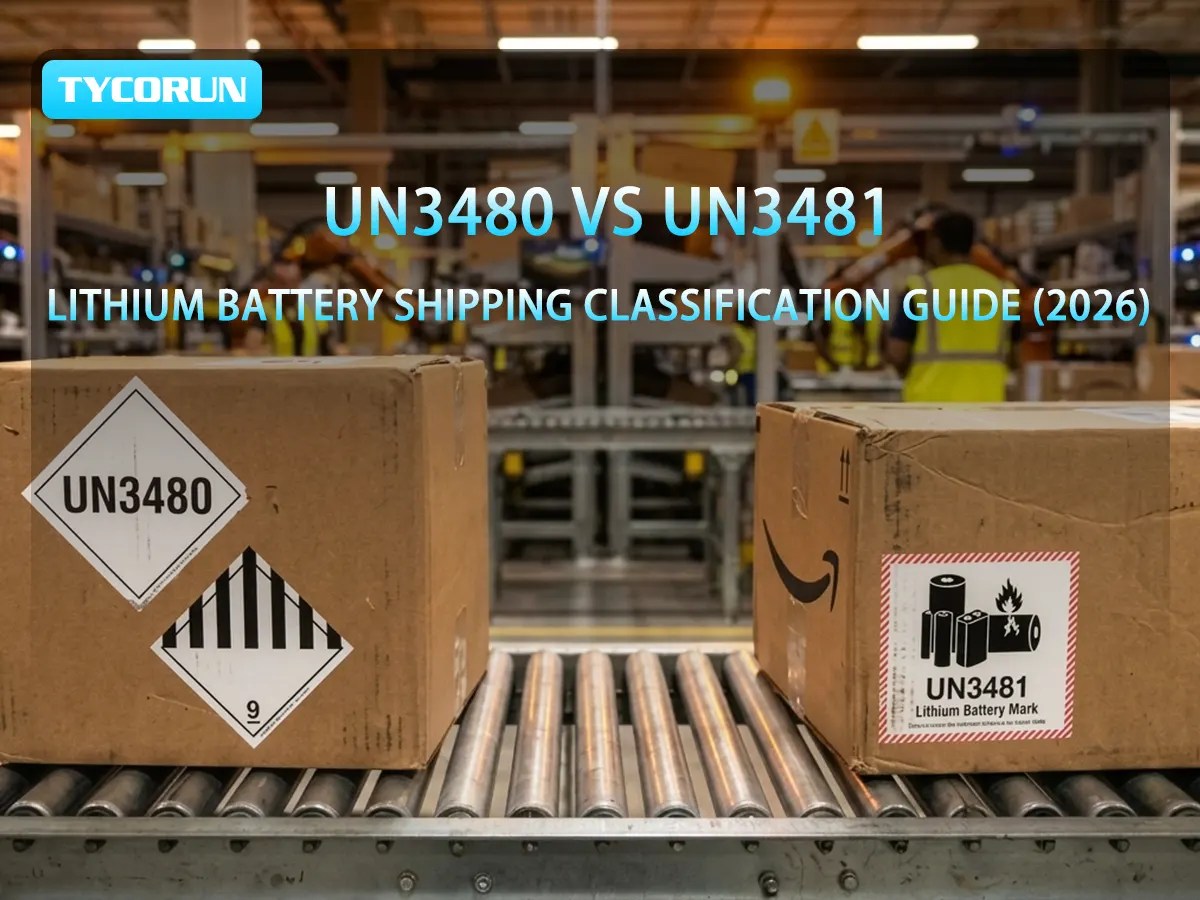
UN3480 applies to lithium-ion batteries shipped by themselves, while UN3481 covers batteries packed with or installed in equipment. This 2026 guide explains how the shipping configuration determines packing instructions (PI965/966/967), labels, state-of-charge limits, and documentation, and includes a practical importer checklist for compliant lithium battery shipping.

What to check before choosing a battery supplier, from in-line coating inspection and leak testing to certifications and how to interpret cycle-life claims.

Lithium-ion batteries power our solar systems, RVs, forklifts, and many more. But are they safe? Yes—when manufactured to standard and used correctly. This guide covers what actually matters, common misconceptions, and how to ensure you’re buying and using a safe battery.
Authors
-
 View all posts
Audrey Chloe is a writer and researcher focused on energy storage technologies, with a particular interest in lithium-ion batteries, battery management systems (BMS), and their real-world use in e-bikes, electric vehicles, and home energy storage. With a background in materials science, she explores how battery chemistry, design, and usage patterns affect performance, safety, and lifespan.
Her goal is to turn complex battery concepts into clear, practical insights that help people make informed decisions about everyday energy technologies.
-
 View all posts
Meg is a battery engineer with 10+ years of experience in the energy storage industry. She holds a B.S. in Electrical Engineering and previously worked as an R&D engineer at a lithium-ion battery manufacturer, where she focused on battery management systems (BMS), charging algorithms, and life-cycle testing for lead-acid, AGM, and lithium chemistries. She has contributed to the development of battery maintenance technologies used in commercial products. Meg now provides technical review for energy storage content to ensure accuracy, safety, and practical value for readers.