Skip to content


Last Updated on July 20, 2026
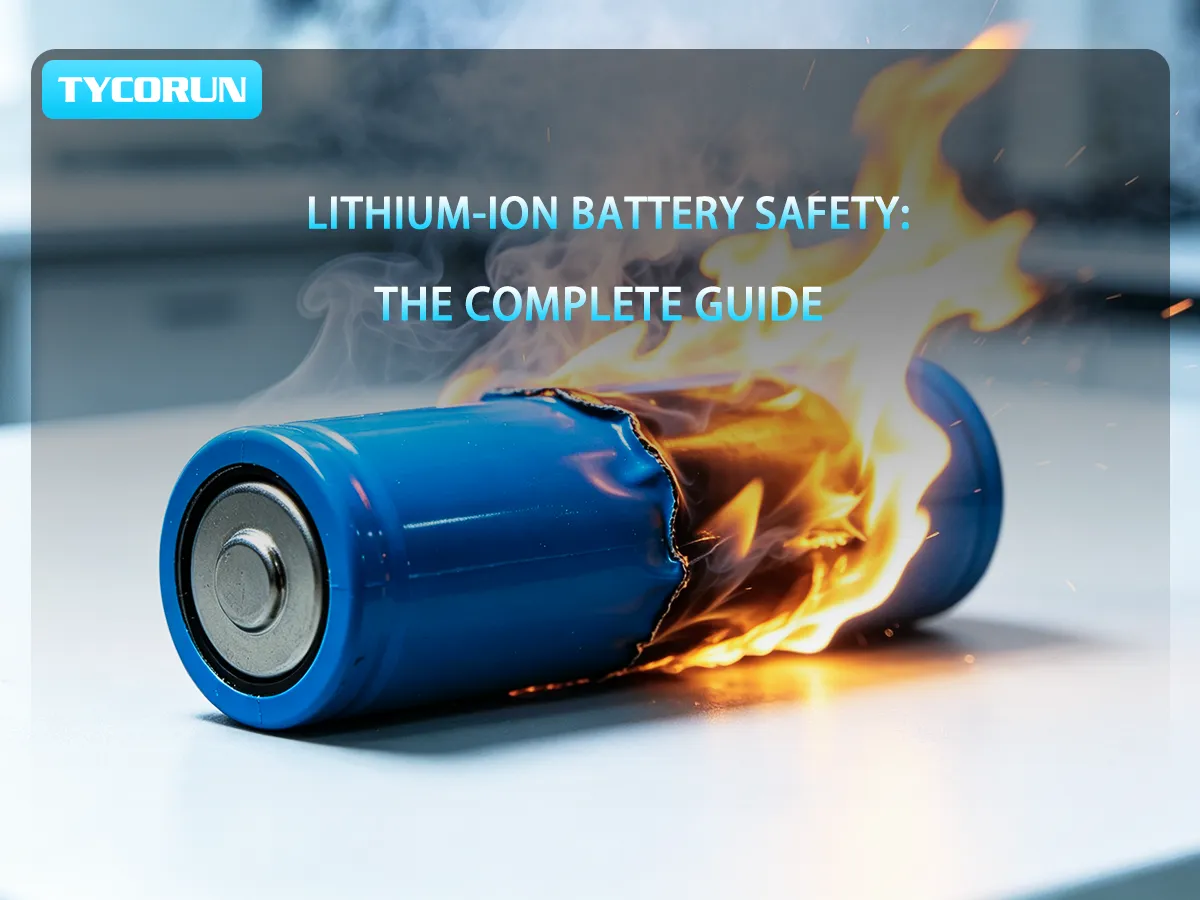
Are lithium-ion batteries safe? Yes. Lithium-ion battery failures are uncommon when batteries are manufactured to recognized safety standards and used correctly. No battery technology is completely risk-free, but proper battery selection, installation, and maintenance greatly reduce the likelihood of safety incidents. However, failures can occur if batteries are damaged, improperly charged, or subjected to severe abuse.
Thermal runaway is physically possible, but the risk can be greatly reduced by choosing an appropriate chemistry, using a compatible charger, and performing regular monitoring. This article answers: are lithium-ion batteries actually safe, what can go wrong, and how to evaluate a battery before buying.
Key Takeaways:
- LiFePO₄ is generally regarded as one of the safest lithium-ion chemistries for stationary energy storage because of its high thermal stability and lower thermal runaway risk
- Modern BMSs continuously monitor key parameters such as voltage, current, temperature, and cell balance
- Many field problems are associated with incompatible chargers, not design defects
- Regular inspections help identify many potential problems before they become serious


Are Lithium-Ion Batteries Actually Safe?
Yes. Billions power smartphones, solar systems, RVs, and forklifts without incident. Airlines allow them in luggage. Hospitals use them in critical systems.
Thermal runaway is possible but uncommon in properly manufactured and properly used lithium-ion batteries. Most reported incidents are associated with manufacturing defects, physical damage, improper charging, or severe abuse.
The difference: lithium failures tend to be dramatic (fire). Lead-acid failures are quiet (just stops working). This perception gap makes lithium feel less safe when data suggests otherwise.

How Lithium Batteries Stay Safe
Three layers of protection work together:
Layer 1: The BMS (Battery Management System)
The BMS is the battery’s brain. It monitors:
- Voltage: Stops charging when cell voltage exceeds the manufacturer’s protection threshold
- Temperature: Reduces or stops charging if battery temperature exceeds the manufacturer’s safety limits
- Cell balance: Prevents one cell from overcharging while others undercharge
- The BMS can rapidly disconnect charging or discharging when abnormal current is detected

Layer 2: Physical Design
Inside the battery case:
- Depending on battery design, protective components may include thermal fuses, pressure-relief vents, reinforced enclosures, and flame-retardant materials
- Pressure-relief vents can release gas to help reduce the risk of rupture
- Metal casings (aluminum or steel) are intended to contain energy rather than rupture outward
Layer 3: Chemistry
Not all lithium-ion chemistries respond the same way to heat, overcharging, and physical abuse. The materials used in a battery’s cathode influence its thermal stability, energy density, and behavior under extreme conditions. As a result, battery chemistry is an important factor when evaluating the overall safety and suitability of a lithium-ion battery.
Why LiFePO₄ Is Generally the Safest Choice for Stationary Use
Among commonly used lithium-ion chemistries, LiFePO₄ has a particularly strong safety profile for stationary applications. Its chemical structure provides greater thermal stability than many nickel-based alternatives, including NMC and NCA chemistries. A study published in the International Journal of Heat and Mass Transfer compared LiFePO₄ with Li(Ni₀.₆Co₀.₂Mn₀.₂)O₂ (NMC622) batteries and found that LiFePO₄ exhibited significantly lower thermal runaway hazards under comparable abuse conditions.
LiFePO₄ (Lithium Iron Phosphate): Offers excellent thermal stability and a significantly lower risk of thermal runaway than many other lithium-ion chemistries. It is widely used and recommended for home energy storage systems, RVs, and industrial applications because of its long service life and strong safety performance.
NCA (Nickel Cobalt Aluminum): Offers higher energy density, which is advantageous in scenarios with limited space and high range requirements, such as electric vehicles, but requires a more sophisticated thermal management system. For stationary energy storage scenarios with ample space and where safety is a priority over energy density, LiFePO₄ is usually a more suitable choice.
NCM (Nickel Cobalt Manganese): Commonly used in portable electronics and many electric vehicles because of its high energy density, making it suitable for applications where compact size and energy capacity are important.
When Not to Choose LiFePO₄
LiFePO₄ is an excellent choice for many stationary energy storage applications, but it is not the best chemistry for every use case. Its lower energy density compared with NCA and some NCM chemistries can make it less suitable where weight and space are major constraints, such as certain electric vehicle applications.
Low-temperature operation is another consideration. At sub-zero temperatures, LiFePO₄ batteries can experience reduced available capacity and charging performance. Below approximately -20°C, capacity and power output can decline significantly, depending on the specific cell design and operating conditions. Charging at temperatures below the manufacturer’s specified minimum can also cause permanent damage, so batteries operating in cold environments require appropriate thermal management.
LiFePO₄ may also be less suitable for applications requiring sustained high-rate discharge or extremely high power from a compact battery pack. While some LiFePO₄ cells are specifically designed for high-power applications, the maximum continuous and peak discharge rates vary significantly by product. Always check the manufacturer’s specifications before selecting a battery for high-current applications.
For applications where maximum energy density, minimal weight, specific low-temperature performance, or very high power output are the main priorities, other lithium-ion chemistries may be more suitable. The best chemistry depends on the specific balance between safety, energy density, operating temperature, power requirements, cost, and service life.
| Chemistry | Relative Thermal Stability | Typical Applications | Typical Stationary Use |
|---|---|---|---|
| LiFePO₄ | High | Home ESS, RVs, Industrial | Preferred for many residential and commercial ESS |
| NCM | Moderate | Portable electronics, EVs, ESS | Used in some ESS applications |
| NCA | Moderate to Low | Electric vehicles | Less common in stationary ESS |
For many stationary energy storage applications, LiFePO₄ offers a strong balance of thermal stability, cycle life, and long-term performance. However, applications prioritizing extreme energy density, specific low-temperature performance, or very high power output may require a different lithium-ion chemistry.
How to Know If a Battery Is Actually Safe
IEC 62619:2022 is an international safety standard specifying requirements and tests for secondary lithium cells and batteries used in industrial applications, including stationary energy storage and certain motive-power applications. Manufacturers claiming compliance must demonstrate that their batteries have passed a series of electrical, mechanical, and environmental safety tests.
Safety evaluations include:
- Overcharge test (evaluates the battery’s response to excessive charging)
- External short-circuit test (evaluates the battery’s behavior during an external short circuit)
- Thermal abuse or thermal shock test (evaluates performance under extreme temperature conditions)
- Vibration and mechanical shock tests (simulate transportation and handling conditions)
- Mechanical impact or crush tests (evaluate resistance to physical damage)
How to verify: Ask the manufacturer or seller for the IEC 62619 test report or certificate issued by an accredited third-party testing or certification body. Make sure the document matches the battery model you intend to purchase.
Red flag: A seller claims the battery is IEC 62619 certified but cannot provide a valid test report or certificate. Exercise caution before purchasing.
UN 38.3 applies to lithium batteries transported by air, sea, rail, or road and demonstrates that the battery has passed transportation safety tests.
Even a certified battery can become unsafe if it is improperly installed, physically damaged, modified, or used outside the manufacturer’s specifications. Safety certifications should therefore be considered one part of an overall battery safety strategy rather than a guarantee of safe operation under all conditions.
ISO 9001 certifies a manufacturer’s quality management system, not the battery itself, so it should be considered a complementary certification rather than a substitute for product-specific safety standards.

What Can Go Wrong
Thermal Runaway
Requires a specific trigger:
- Severe overcharge (BMS failure or wrong charger)
- Physical damage (puncture or crushing causing internal short)
- Manufacturing defect (rare in certified batteries)
- Extreme external heating or exposure to temperatures beyond the manufacturer’s specified operating limits.
Prevention: Good BMS, proper storage (15–25°C), compatible charger, careful handling, regular monitoring.
Incompatible Chargers
Some lead-acid chargers use charging profiles that are not suitable for lithium batteries. Different lithium chemistries have different charging voltage limits, so chargers must match the battery manufacturer’s specifications.
The BMS may disconnect charging to protect the battery, but the system can still fail to charge if the charger is incompatible.
Solution: We recommend always upgrading to a lithium-compatible charger before installation. For RVs: lithium-compatible alternator controller. For home solar: MPPT controller rated for lithium. This step is important and should not be skipped.
Manufacturing Defects
Manufacturing defects are uncommon in batteries produced under certified quality systems but remain one possible cause of failure. Internal separator failure, contamination, or material defects, can be avoided by buying from certified manufacturers with long track records. IEC 62619 testing is designed to catch most defects before batteries reach customers.
Age Degradation (typically becomes more noticeable after several years of use)
Lithium batteries degrade normally: capacity gradually decreases over time, with the rate depending on temperature, depth of discharge, charging habits, and operating conditions. At around 80% of original capacity, replacement should be considered. As batteries age, internal resistance generally increases while available capacity declines.
Safety by Application
Home Solar:
- Install in garage or separate enclosure with ventilation
- Use MPPT controller rated for lithium
- Monitor monthly via BMS display or app
RV/Marine:
- Field reports from installers indicate that incompatible chargers are a leading cause of RV lithium battery issues
- One common scenario: RV owners upgrading to lithium batteries but retaining original lead-acid charging equipment
- Use a charger or alternator charging system specifically compatible with the lithium battery’s chemistry and specifications
- LiFePO₄ is widely used in RV and marine applications because of its long cycle life and strong thermal stability
- Monitor battery temperature and voltage during extended travel, particularly in extreme heat
Industrial (Forklifts, Warehouse):
- Forklift batteries cycle 1–2 times daily (300–500 cycles/year) vs. home solar at ~200 cycles/year
- Require IEC 62619 certification
- We recommend professional installation
- Provide employee training on overheating signs
Consider installing monitoring systems with alerts
How to Store and Use Lithium Batteries Safely
Temperature & Humidity
Ideal storage: 15–25°C. Above 30°C tends to accelerate aging. Below 0°C can temporarily reduce performance (without permanent damage in most cases).
Do not charge cold batteries. Let them warm to at least 10°C first. Charging many lithium-ion batteries below the manufacturer’s recommended minimum temperature can cause irreversible damage.
Charging
- Use the charger designed specifically for your battery type and voltage
- Ideal charge rate: 0.5C to 1C (where C = battery capacity). Follow the manufacturer’s recommended charging current or C-rate
- Slower charging (0.5C) typically extends lifespan. Faster charging can stress the battery
- Charge in normal temperature ranges (15–25°C)
- Keep charge between 10% and 90% for longest typical lifespan
- For storage lasting months: charge to 50%, store in cool place, recharge every 3–6 months

Monthly Monitoring Checklist
- Visual inspection: Check for swelling, corrosion, leakage, or physical damage.
- BMS display: Review the BMS for abnormal voltage, temperature, alarms, or fault codes.
- Odor check: Check for unusual chemical, burning, or acidic odors.
Annual Testing
- Capacity test using dedicated tester or BMS built-in function
- Record capacity and compare to last year
- Compare the measured capacity with previous test results to identify unusual degradation trends
Stop Using Immediately If You See:
- Case swelling or bulging
- Fluid leaking or corrosion around terminals
- Burning or acrid chemical smell
- Battery too hot to touch during normal use
- Capacity loss exceeding 5% in one month
What to Do If a Battery Fails
Minor Signs (Investigate but don’t panic):
- Unusual smell (sharp, acidic, chemical)
- Slight case swelling
- Battery warm to touch without charging
- Sudden performance reduction
Major Signs (Take immediate action):
- Smoke or vapor
- Flames or fire
- Fluid leaking from case
- Strong chemical smell
- Battery too hot to touch
- Sparking or crackling sounds
If You See Smoke, Fire, or Signs of Thermal Runaway:
- Evacuate immediately. Don’t attempt to manage the situation.
- Call your local emergency services immediately. Tell them: “Lithium-ion battery fire.”
- Lithium-ion battery fires require different firefighting strategies than fires involving lithium-metal batteries. Always follow the battery manufacturer’s emergency instructions and local fire authority guidance.
- Only attempt to extinguish the fire if it is small, contained, if you have been trained to use a fire extinguisher, and it is safe to do so. Many fire authorities recommend large amounts of water to cool lithium-ion batteries and reduce the risk of thermal runaway propagation or re-ignition, while specialized extinguishing agents may also be used where appropriate.
- If the fire is spreading or conditions are unsafe, evacuate immediately and wait for emergency responders. When calling emergency services, clearly state that it is a lithium-ion battery fire so responders can prepare the appropriate equipment and tactics.
If Battery Is Damaged (Puncture, Crushing):
- Stop using immediately
- Place in well-ventilated area away from people
- Monitor for 24–48 hours for signs of thermal runaway (heat, smoke, smell)
- Delayed thermal runaway can occur hours after impact
- If any signs appear: evacuate and call emergency services
- Take to professional battery recycling facility
If Battery Is Leaking:
- Wear gloves and eye protection
- Don’t touch leaking fluid directly
- Do not attempt to clean leaking electrolyte unless instructed by the manufacturer. Wear gloves, avoid skin contact, isolate the battery, and take it to an authorized recycling facility.
- Isolate the battery in a well-ventilated area and contact the manufacturer or a qualified recycling facility for handling instructions.
- Do not use the battery further if leaking
How to Evaluate a Battery Before Buying
Ask These Questions:
About Certifications:
- “Does this have IEC 62619 certification?” (Get the certificate number)
- “Can you provide the IEC 62619 test report or certificate issued by an accredited certification body?”
About the Manufacturer:
- “Who makes the cells?”
- “How long has the manufacturer been in business?” (Generally, 10+ years indicates more stability than 2 years)
- “What’s the manufacturer’s real-world failure rate?” (Ask for data: “We’ve sold 10,000 units, and 5 failed.” This demonstrates transparency)
- “What’s the manufacturer’s warranty?” (A 5–10-year warranty is typical. Less than 3 years is generally a concern)
About the BMS:
- “What parameters does the BMS monitor?” (Should typically include voltage, temperature, current, cell balance)
- “What’s the response time for overcurrent events?” (The BMS should provide overcurrent protection and automatic shutdown when abnormal conditions are detected)
- “Can I monitor it remotely?” (App monitoring is a positive indicator)
About Support:
- “What happens if the battery fails within warranty?” (Replacement? Repair? Refund?)
- “Do you have technical support?” (Phone, email, response time?)
- “Is there a return policy?” (30–60 days is generally reasonable)
Check the Datasheet for:
- Voltage (48V, 24V, 12V—does it match your system?)
- Capacity (kWh or Ah—does it meet your needs?)
- Chemistry (LiFePO₄ recommended for many stationary applications)
- Charge rate (follow the manufacturer’s recommendation)
- Operating temperature range
- Typical cycle life (actual performance varies by manufacturer and operating conditions)
- Safety certifications (such as IEC 62619 and UN 38.3)
- Safety features or thermal protection information (if provided)
- Warranty
Red Flags: Exercise Caution If:
- Claims IEC certification but can’t show certificate number
- Price is 30–50% below comparable products (may indicate lower quality)
- “Limited-time offer” creating pressure to buy immediately
- No warranty mentioned
- Company you’ve never heard of with minimal online history
- Only sold on marketplace (can present higher fraud risk)
- Negative reviews mentioning fire, explosion, or overheating
- No phone number or support contact
- Inability to answer basic technical questions
- No datasheet available
- Specifications are vague (“high quality,” “premium grade”) instead of numeric
- No BMS mentioned or described
- Chemistry not specified
- No temperature monitoring capability

How Long Is a Battery Safe to Use?
Normal Degradation:
| Age | Typical Condition |
|---|---|
| Years 1–5 | Most batteries retain a high percentage of their original capacity under normal operating conditions. |
| Years 5–10 | Capacity gradually declines depending on operating conditions and usage. |
| Beyond 10 years | Evaluate battery condition regularly and follow the manufacturer's replacement recommendations. |
When to Replace:
Performance threshold (80% capacity): You’re getting only 80% of original energy. Battery is aging faster. You’ll likely notice slower charging or lower voltage.
A battery showing rapid capacity loss, excessive heat generation, swelling, or repeated BMS faults should be evaluated for replacement regardless of its remaining capacity.
Physical signs (any capacity): We recommend replacing immediately if you see swelling, leaking, or unusual smells, regardless of stated capacity.
Age rule: Even if capacity remains acceptable, batteries approaching the end of their manufacturer-specified service life should be professionally evaluated or replaced.
Extended Storage:
- Charge to 50% before storing (not 0%, not 100%)
- Store in cool place (15–20°C ideally)
- Check every 3–6 months for physical damage or leaks
- Top up to 50% charge if voltage drops below 40%
Batteries stored this way typically remain safe for years.
When Returning Stored Battery to Use:
- First recharge: Use slow charger (0.5C rate) and monitor temperature
- Don’t leave unattended during first recharge
- Verify performance is normal (voltage, capacity test)
Disposal and Recycling:
Never throw lithium batteries in trash. We recommend taking them to professional recycling facilities.
- Search “lithium battery recycling” + your city
- Call local hazardous waste facility
- Ask your battery retailer (many accept old batteries)
- Check manufacturer website (some offer mail-back programs)
Before drop-off:
- Do not intentionally discharge a damaged or swollen battery
- Tape exposed terminals when appropriate to prevent accidental short circuits
- Follow the recycling facility’s instructions for preparing the battery for transport
- Keep in cool, dry place until drop-off
- Don’t expose to water
- Never attempt to disassemble
Why it matters: Professional recycling can recover valuable materials and helps reduce the environmental impact associated with battery disposal.
Conclusion
When properly designed, certified, installed, and maintained, lithium-ion batteries provide a safe and reliable power solution for home, commercial, and industrial applications.
Safety typically requires three non-negotiable decisions:
- Choose LiFePO₄ for most stationary energy storage applications because it combines strong safety performance, excellent thermal stability, and long cycle life.
- Use a lithium-compatible charger, as many field problems are associated with incompatible charging equipment.
- Monitor monthly. Perform routine visual inspections and monitor BMS information on a regular basis.
Before buying: Verify IEC 62619 certification. Confirm the cells come from a reputable manufacturer. Check that the warranty is 5–10 years.
Before installing: Confirm charger compatibility. Place battery in a ventilated location.
After installation: Set monthly calendar reminders for visual checks.
Take action today: Verify IEC 62619 certification. Confirm charger compatibility. Choose LiFePO₄.
Frequently Asked Questions
Yes. Although uncommon, lithium-ion batteries can catch fire if they are severely overcharged, physically damaged, improperly manufactured, or exposed to extreme abuse. Using certified batteries, compatible chargers, and proper installation greatly reduces the risk.
Generally, yes, when comparing properly manufactured and properly used batteries. Lithium-ion batteries and lead-acid batteries have different failure modes. Properly manufactured lithium-ion batteries generally provide excellent safety performance when used with a suitable BMS, compatible charging equipment, and correct installation. Lead-acid batteries present different hazards, including hydrogen gas generation and acid leakage.
Yes. Compared with many NCM and NCA chemistries, LiFePO₄ provides greater thermal stability and a lower risk of thermal runaway. These characteristics make it a common choice for home energy storage, RV, and industrial battery systems where safety and long service life are priorities. Other chemistries are used in phones and cars for energy density, not safety.
Not always, incompatible charging equipment is a common cause of lithium battery problems. Some chargers designed only for lead-acid batteries use charging profiles that are incompatible with lithium batteries. Use a charger designed specifically for your battery type. For RVs, this means upgrading to a lithium-compatible alternator controller.
No. Heat accelerates degradation and increases failure risk. Ideal storage is 15–25°C. Above 30°C continuously, degradation accelerates noticeably. Prolonged exposure to temperatures above 30°C generally accelerates battery aging.
Yes, when the battery, charging system, and installation are properly matched. Before installing a lithium battery in an RV, verify that the existing charger, converter, alternator charging system, and other charging equipment are compatible with the battery chemistry and the manufacturer's specifications. LiFePO₄ batteries are widely used in RV applications, but charging and operating conditions should always follow the battery manufacturer's requirements. Monitor battery temperature and voltage during operation, particularly in extreme heat.
About TYCORUN
TYCORUN manufactures LiFePO₄ battery solutions for residential energy storage, RV, marine, and industrial applications. Our products are equipped with integrated Battery Management Systems (BMS) and are available in a range of voltage and capacity configurations to meet different energy storage requirements. Because specifications vary by model, refer to the applicable product datasheet for information on service life, cycle life, certifications, and operating conditions.

In this article, you’ll learn about lithium batteries, answering what happens if you drop a lithium battery, risks of lithium battery dropped, impact on battery performance, signs of a damaged lithium battery, how to handle a dropped lithium battery safely and real-life examples.

This article covers lithium battery types, transport regulations, proper packaging, required documents, and carrier selection for safe, compliant shipping.

Therefore, this article will help you understand more about can you use a damage lithium battery. This article will discuss everything from understanding what damage means in lithium batteries, answering the main question, the risks of using damaged lithium batteries, how to identify them, what to do, safe disposal, and how to prevent lithium battery damage.
Authors
-
 View all posts
Audrey Chloe is a writer and researcher focused on energy storage technologies, with a particular interest in lithium-ion batteries, battery management systems (BMS), and their real-world use in e-bikes, electric vehicles, and home energy storage. With a background in materials science, she explores how battery chemistry, design, and usage patterns affect performance, safety, and lifespan.
Her goal is to turn complex battery concepts into clear, practical insights that help people make informed decisions about everyday energy technologies.
-
 View all posts
Meg is a battery engineer with 10+ years of experience in the energy storage industry. She holds a B.S. in Electrical Engineering and previously worked as an R&D engineer at a lithium-ion battery manufacturer, where she focused on battery management systems (BMS), charging algorithms, and life-cycle testing for lead-acid, AGM, and lithium chemistries. She has contributed to the development of battery maintenance technologies used in commercial products. Meg now provides technical review for energy storage content to ensure accuracy, safety, and practical value for readers.