A Guide to the 7 Main Lithium Battery Types – Explained in Detail

In this article, we will discuss in more depth the 7 types of lithium batteries are there, compare each type, and determine the best type for specific applications.

Author :

Reviewers:

Last Updated on May 29, 2025


Lithium batteries are one of the technologies that act as the main source in various applications in today’s modern era. This is because lithium batteries offer a variety of reliability, one of which is high energy density, long durability, and long lifespan. However, along with technological developments, lithium battery types are increasingly developing to meet specific existing needs. 


In general, each existing lithium battery type certainly has its own unique characteristics. In this article we will discuss in more depth about how many types of lithium batteries are there? comparison between each of the lithium battery types, and the best lithium battery types for specific applications.

Table of Contents
    Add a header to begin generating the table of contents
    YouTube_play_button_icon

    What is Lithium Battery?

    Lithium battery is basically one type of battery that uses lithium technology as the main component in their electrochemical cell. Lithium batteries are widely used because of their high battery energy density reliability, lightweight design, and long battery life cycle compared to other traditional battery technologies.


    Lithium batteries are also divided into two categories based on their use, which are primary and secondary. Where primary lithium batteries can usually only be used once or non-re-chargeable, their use is usually for small electronic devices. While secondary lithium batteries can usually be used multiple times or are rechargeable, this type of lithium battery is widely used for smart electronic equipment such as smartphones, laptops, EVs, and also for energy storage.

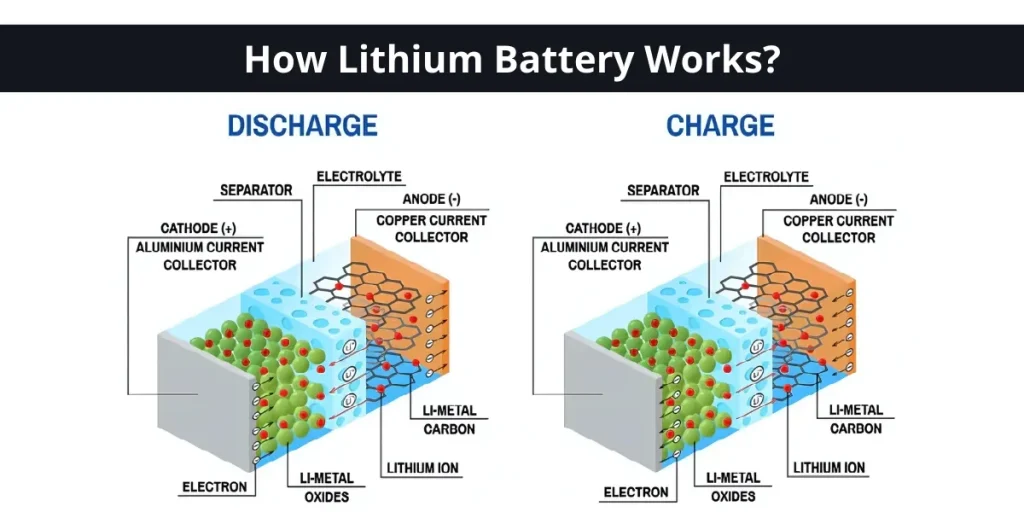
    How Lithium Battery Works?

    Lithium batteries work based on the movement of lithium ions between the anode and cathode through the electrolyte. During the discharge period, lithium ions will move from the anode to the cathode to generate electricity. Meanwhile, when charging lithium ions will move back to the anode to store energy that can be used in the future. To know more about how lithium batteries work, you can read the article on how do lithium-ion batteries work.

    How Lithium Battery Works

    Major Types of Lithium Batteries

    Lithium batteries themselves consist of several major types that were deliberately developed to meet different energy needs. Each type of lithium battery also has unique characteristics that can distinguish each type. Here are some of the main types of lithium batteries that are commonly used in everyday life.

    Lithium-Ion (Li-Ion) Battery

    Lithium ion (Li-ion) batteries are one of the most common types of batteries used in everyday electronic devices such as smartphones, laptops, and electric vehicles (EVs). This type of battery has a high energy density despite its small size. In addition, the recharge cycle of this lithium battery type is quite long compared to conventional batteries.

    However, this type of lithium battery is sensitive enough to high temperatures that it can cause battery thermal runaway – a condition where the battery overheats to the point of potential fire or explosion. Therefore, when purchasing this lithium battery type, it is important to make sure that you buy it from a trusted and high-quality manufacturer. At TYCORUN, as a lithium-ion battery supplier, the lithium-ion battery products we present are integrated with Battery Management Systems (BMS) that can maintain maximum battery safety and performance.

    TYCORUN Lithium-Ion (Li-Ion) Battery

    Lithium Iron Phosphate (LiFePO4) Battery

    Lithium iron phosphate (LiFePO4) batteries are one the lithium battery types composed of LiFePO4 cells that have high safety and are known for having a long lifespan. This battery is also known for its high stability so that it has a lower risk of fire or explosion. This type of lithium battery is widely used for the application of UPS, energy storage systems, EVs, and power tools.

    If you are looking for LiFePO4 batteries, TYCORUN is known to be one of the LiFePO4 lithium battery manufacturers that presents various types of high-quality LiFePO4 with various capacities.

    TYCORUN Lithium Iron Phosphate (LiFePO4) Battery

    Lithium Polymer (Li-Po) Battery

    Lithium polymer (Li-Po) battery is a type of lithium battery that uses gel polymer electrolyte as its main component, instead of liquid as in conventional Li-ion. With the main component in the form of a gel, Li-Po has a more flexible design, lightweight, and can be made in various shapes and sizes.

    Li-Po batteries themselves have the reliability to provide high power in a short time, but are also susceptible to physical damage and overcharging. Some devices that are known to use this lithium battery types are drones, wearable devices, remote control (RC) devices, and premium smartphones.

    Lithium Titanate (LTO) Battery

    Lithium titanate (LTO) battery is one of the lithium battery types that has a very fast charging capability and a very long cycle life of more than 10,000 cycles. LTO is known to use a lithium-titanate-based anode that allows the charging process to take place in just a few minutes. This type of lithium battery is also known to have high thermal stability and can operate in a wide range of extreme temperatures. However, LTO is known to have a low energy density, making its size much larger. The application of this battery is known to be widely used for public transportation such as electric buses, energy storage, and military vehicles.

    Lithium Cobalt Oxide (LiCoO2) Battery

    Lithium cobalt oxide (LiCoO2) battery is also one of the lithium battery types that has a high energy density, so it is widely used in portable modern electronic devices such as smartphones and laptops. This lithium battery type uses cobalt in its cathode material which allows for greater power storage in a small size.

    However, this type of lithium battery has a shorter cycle life and is prone to excessively high temperatures. Therefore, the use of this type of battery is focused on electronic devices that do not require a lot of recharging such as smartphones, laptops, digital cameras, and various other small electronic devices.

    Lithium Manganese Oxide (LiMn2O4) Battery

    Lithium manganese oxide (LiMn2O4) battery has high thermal stability, making it safer than cobalt-based batteries. The chemical structure of this type of lithium battery allows for better heat dissipation, reducing the risk of overheating of the battery.

    However, despite having a very high level of safety, this lithium battery type has a shorter cycle life compared to LiFePO4 and NMC. Therefore, this lithium battery type is commonly used for equipment that requires high power with a short duration of use such as medical equipment, power tools, and hybrid vehicles.

    Lithium Nickel Manganese Cobalt Oxide (NMC) Battery

    Lithium nickel manganese cobalt oxide (NCM) battery is one of the lithium battery types that has a combination of energy density, safety, and cycle life that are balanced with each other. Because of its reliability, this type of lithium battery is widely used for electric vehicle (EV) applications because it has a high level of safety.

    At TYCORUN, we offer NMC type lithium batteries in the form of swap battery that has a high level of safety. Battery swap station solutions that we offer aim to make it easier for our customers to maintain and minimize the battery replacement cost which is quite high in an electric vehicle. Therefore, battery swap is one of the future technological innovations that is very brilliant because it can minimize various problems with batteries in an electric vehicle.

    TYCORUN Lithium Nickel Manganese Cobalt Oxide (NMC) Battery

    Comparison of Lithium Battery Types

    Are there different types of lithium batteries? Of course, each lithium battery type has unique characteristics that set it apart and make it more suitable for certain applications. The comparison usually consists of energy density, safety, cycle life, cost, and the main application that is more suitable for that lithium battery type. Below is a comparison table of lithium battery types.

    Lithium Battery Types Energy Density Safety & Thermal Stability Cycle Life Price Common Applications
    Lithium-Ion (Li-Ion) High Moderate, but there is risk of overheating. 500 - 1.500 cycles Moderate Smartphone, laptops, EVs
    Lithium Iron Phosphate (LiFePO4) Moderate Vary safe, because have a high stability. 2.000 - 5.000 cycles Affordable Solar storage, EVs, UPS
    Lithium Polymer (Li-Po) Moderate-High Moderate, really sensitive to overcharging. 500 - 1.000 cycles Moderate Drones, wearables, RC devices
    Lithium Titanate (LTO) Low Extremely safe, have a high thermal stability. more than 10.000 cycles Expensive Public transport, grid storage
    Lithium Cobalt Oxide (LiCoO2) Very High Low, very risk with overheating. 300 - 800 cycles Expensive Smartphones, laptops, cameras
    Lithium Manganese Oxide (LiMn2O4) Moderate-High Safe, have a high thermal stability. 500 - 1.200 cycles Moderate Medical devices, power tools, EVs
    Lithium Nickel Manganese Cobalt Oxide (NMC) High Safe, this lithium battery types have a safety and performance balanced. 1.000 - 2.000 cycles Moderate EVs, medical devices, grid storage

    Best Lithium Battery Types

    The best lithium battery types basically depend on the battery’s ability to support the application, durability, safety, and energy density. Here are some recommendations for the best lithium battery types based on their usage.

    Best Lithium Battery Types
    • Best for Everyday Electronics: Li-ion and LiCoO2 are among the types that are suitable for everyday electronic devices such as smartphones, laptops, and tablets. This is because these lithium battery types have a high energy density, as well as a lightweight and efficient design.
    • Best for Electric Vehicles (EVs): NMC and LiFePO4 are suitable for this application because they have high durability and safety, long cycle life, and high efficiency.
    • Best for Renewable Energy Storage (Solar & Wind): LiFePO4 and lithium titanate (LTO) are suitable for the application of energy storage solutions because they have long durability and high safety levels, making them suitable for large-scale energy storage.
    • Best for Power Tools and Medical Devices: Lithium manganese oxide (LiMn2O4) and NMC are among the lithium battery types suitable for this application due to their durability, safety, and high energy density.
    • Best for High-Performance & RC Devices: Lithium polymer (Li-Po) is suitable for RC devices such as drones, wearables, and RC cars due to its high design flexibility, high power, and fast response.

    Conclusion

    As it is known that currently, lithium batteries are one of the important components in various specific applications in modern days. Based on the previous explanation, we can know more about how many lithium battery types so far and can also understand the advantages and disadvantages of each. By understanding the various lithium battery types, we can choose the type of battery that best suits the specific needs that are currently needed.


    If you are looking for a good quality lithium battery at an affordable price, you can buy it at TYCORUN. We provide a wide range of lithium batteries made from premium materials and rigorously tested to ensure safety and performance. If you want to know more about our lithium battery products and get the best price, you can contact our experts here. We will be happy to serve you 24/7!

    Frequently asked questions

    Lithium batteries have a total of 7 types that have their own unique characteristics. The seven types of lithium batteries consist of Lithium-Ion (Li-Ion), Lithium Iron Phosphate (LiFePO4), Lithium Polymer (Li-Po), Lithium Titanate (LTO), Lithium Cobalt Oxide (LiCoO2), Lithium Manganese Oxide (LiMn2O4), and Lithium Nickel Manganese Cobalt Oxide (NMC).

    Some ways and tips to be able to extend the life of lithium batteries are as follows.

    • Avoid overcharging and over-discharging.
    • Use a charger that matches the specifications of the lithium battery you have.
    • Store lithium batteries in a room with a stable and dry temperature.
    • Do not let the battery experience a long discharge before finally being used again.

    Yes, lithium batteries can be recycled. The recycling process is highly recommended for lithium batteries because lithium batteries generally consist of various toxic components that can harm health and the environment if disposed of carelessly. In addition, various valuable metals found in lithium batteries such as lithium, nickel, and cobalt can be reused to make new batteries. Therefore, you need to know exactly where to recycle batteries in your neighborhood.

    YouTube_play_button_icon

    Who We Are

    With over 17 years of experience, TYCORUN is a leading lithium battery manufacturer committed to driving innovation and development of battery technology, and the company’s current business covers two-wheeled and three-wheeled, four-wheeled power batteries, energy storage batteries, inverters, battery swap cabinets and motorcycles. Its products are widely used in Europe, the Middle East, and Africa.

    The company provides customized battery services, from cells to complete systems, and holds certifications like ISO9001, CE, TUV, and UL. TYCORUN has developed solid-state low-temperature batteries for better performance in cold conditions and uses advanced BMS algorithms for safety and longer life. It also prioritizes sustainability with low-pollution materials and eco-friendly production.

    Authors

    • Anastasia

      Anastasia is a dedicated renewable energy researcher and technical writer specializing in inverters, home energy storage solutions, and clean energy trends. With a sharp eye for market analysis and industry shifts, she transforms complex technical concepts into actionable, easy-to-understand insights. Her goal is to empower homeowners and businesses alike to make highly informed decisions regarding sustainable energy deployment.

      View all posts
    • Meg

      Meg is a battery engineer with 10+ years of experience in the energy storage industry. She holds a B.S. in Electrical Engineering and previously worked as an R&D engineer at a lithium-ion battery manufacturer, where she focused on battery management systems (BMS), charging algorithms, and life-cycle testing for lead-acid, AGM, and lithium chemistries. She has contributed to the development of battery maintenance technologies used in commercial products. Meg now provides technical review for energy storage content to ensure accuracy, safety, and practical value for readers.

      View all posts
    Table of Contents
      Add a header to begin generating the table of contents

      You Might Also Like...

      How to Convert Amp Hours to Watt Hours (Ah to Wh Calculator and Chart)

      How to Convert Amp Hours to Watt Hours (Ah to Wh Calculator and Chart)

      Convert amp hours to watt hours with one formula: Wh = Ah × V. This guide gives you a calculator, lookup charts from 12V to ...
      Lithium Battery for RV Off-Grid Sizing and Cold Charging

      Lithium Battery for RV: Off-Grid Sizing and Cold Charging

      Planning an off-grid RV trip or camping in winter? Find out how much battery capacity you need, how to match it to your appliances, and ...
      Ganfeng Begins 588Ah Storage Cell Ramp; 648Ah Planned for 2027

      Ganfeng Ramps 588Ah Storage Cells, 648Ah Due 2027

      Ganfeng LiEnergy has moved its 588Ah storage cell line into production ramp and scheduled a 648Ah cell for 2027. This article converts the new formats ...
      EU Battery Passport 2027 Requirements for LMT and Energy Storage Batteries

      EU Battery Passport 2027: Requirements for LMT and Energy Storage Batteries

      From 18 February 2027, LMT batteries, EV batteries and industrial batteries above 2 kWh need an EU battery passport. See what the record contains, who ...
      EU Battery Regulation 20231542 What Battery Buyers Need to Know

      EU Battery Regulation 2023/1542: What Battery Buyers Need to Know

      A buyer’s breakdown of Regulation (EU) 2023/1542 for e-mobility and stationary storage. Learn how LMT and industrial batteries are classified, what applies from CE marking ...
      Lithium Battery vs Lithium-Ion Battery What’s the Real Difference

      Lithium Battery vs Lithium-Ion Battery: What’s the Real Difference?

      Lithium vs lithium-ion mostly comes down to single-use versus rechargeable. Here is how to read the label, compare voltage and shelf life, and pick the ...