AGM vs Flooded Battery: Differences, Cost and Which to Choose

AGM and flooded batteries differ in maintenance, vibration resistance, self-discharge and price. This guide compares lifespan, cost and charging needs, and shows when each type is the better choice.

著者:

レビュアー

。
AGM vs Flooded Battery Differences, Cost and Which to Choose

Last Updated on 10月 21, 2026
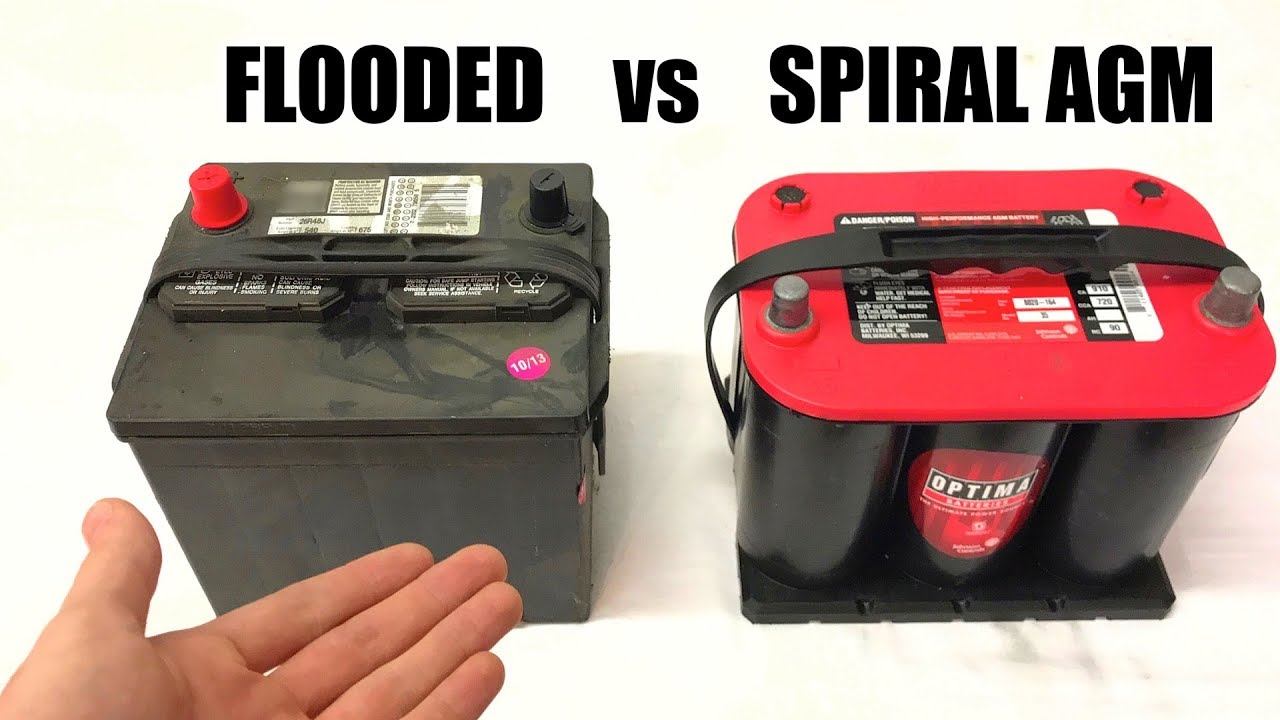
Choosing between an AGM and a flooded battery usually comes down to how you use the battery, how much maintenance you want to do and how much you are willing to spend. Both are lead-acid batteries, but they are built differently and behave differently in vehicles, RVs, boats and backup systems. This guide compares flooded vs AGM batteries on lifespan, cost, charging, compatibility and safety, so you can pick the right one.

Quick Answer: AGM or Flooded?

An AGM battery costs more up front, but it needs no maintenance, resists vibration, self-discharges more slowly and handles frequent cycling and fast charging better. A flooded battery costs less and works well in simple, low-demand setups where you can check the water level and keep the battery upright. If your vehicle has start-stop, heavy electrical loads or rough use, choose AGM. If you want the lowest purchase price and your setup is basic, flooded is still a valid choice.

特徴Flooded (wet cell)年次総会
電解質Free liquid sulfuric acidAcid absorbed in glass mat
メンテナンスMay need distilled water top-upsなし
Typical price, 12 V 100 Ah deep-cycle (US retail)About $90 to $150About $180 to $350
Cycle life, deep-cycle type at 50% depth of dischargeRoughly 400 to 800Roughly 600 to 800
Self-discharge per monthAbout 5% to 15%About 1% to 3%
Cold cranking and cold storageCapacity drops sharply in the coldLower internal resistance, holds charge in storage
耐振動性Fairグッド
流出のリスクHigher if tilted or damagedLow, spill-resistant
Charge acceptance中程度より高い
Mounting positionUpright onlyMore flexible, follow the maker’s guidance
Start-stop vehiclesNot suitableSuitable (AGM or EFB required)
最適Basic vehicles, budget replacements, ventilated stationary useStart-stop vehicles, RVs, boats, motorcycles, high-load or rough conditions

Cycle counts come from manufacturer datasheets and Battery University summaries and are only comparable at the same depth of discharge (DoD). Prices are typical US retail ranges, not datasheet values, and change by brand, size and date, so check current listings before you buy. Sources are listed at the end of this page.

YouTube_play_button_icon

What Is a Flooded Battery?

A flooded battery, also called a wet cell or conventional lead-acid battery, has lead plates sitting in liquid sulfuric acid. Many designs have removable vent caps so you can top up distilled water as the electrolyte level drops. Some “maintenance-free” flooded batteries are sealed from the user’s point of view, but the acid is still free liquid, so they must stay upright.

Flooded batteries are the oldest and most common design. They are cheap, widely available and forgiving of some charging mistakes, because overcharging mostly boils off water that you can replace. But they lose water over time, self-discharge faster and are less comfortable with vibration, tilting and frequent deep discharge.

What Is an AGM Battery?

AGM stands for absorbent glass mat. The electrolyte is held in fine glass fiber mats pressed between the plates, so there is no free-flowing liquid. The battery is sealed and uses a valve to release gas only under abnormal pressure, which is why it is also called a valve-regulated lead-acid (VRLA) battery.

This construction gives AGM batteries lower internal resistance, better vibration resistance, no routine watering and a much lower risk of leaking. It also makes them more sensitive to overcharging, because water lost through the valve cannot be replaced. By design, AGM batteries are sealed and maintenance-free, with plates rigidly compressed to withstand heavy shock and vibration.

Cutaway diagram comparing a flooded lead-acid battery with liquid electrolyte and an AGM battery with glass mat separators

Key Differences Between AGM and Flooded Batteries

寿命とサイクル寿命

Cycle life varies dramatically based on plate construction and depth of discharge (DoD):

  • Deep-cycle lead-acid (flooded): Typically delivers 400–500 cycles at 50% DoD, or 1,000+ cycles at a shallow 30% DoD.

  • Starting batteries: Built with thin plates (~1 mm) for quick cranking current, managing only 100–120 cycles at 50% DoD.

  • Deep-cycle AGM: Heavy-duty plates (1.8–2.8 mm) yield 600–750 cycles at 50% DoD, reaching up to 1,500 cycles at 30% DoD.

A well-maintained flooded deep-cycle battery can rival an AGM on raw lab cycle counts. However, AGM excels in real-world duty cycles: faster recharge rates, better resilience to partial charging, zero maintenance, and superior vibration resistance. That makes AGM the longer-lasting choice for start-stop vehicles, commercial fleets, marine applications, and high-vibration off-grid setups.

メンテナンス

Flooded batteries may need regular checks of the electrolyte level and periodic topping up with distilled water, plus cleaning of corrosion around the terminals. In hot climates or heavy cycling, a flooded battery can need watering every few months. AGM batteries need no watering, but terminals still need to be kept clean and tight.

Vibration and Physical Durability

The glass mat holds the plates firmly and the case is sealed, so AGM batteries cope better with vibration, bumps and off-road or marine use. Flooded batteries can suffer plate damage and acid spills under the same conditions.

充電動作

AGM batteries accept charge faster and recover more quickly after short trips or heavy loads, thanks to their lower internal resistance. They also need a charger or charging system suited to AGM. Charging at too high a voltage can dry out the mat and shorten life, because the lost water cannot be topped up. Charging limits differ between manufacturers and between models, so always follow the voltage and current limits printed on the battery or in its datasheet, and use an AGM-compatible charging mode.

寒冷地でのパフォーマンス

Cold reduces the usable capacity of every lead-acid battery, but AGM holds an advantage in two ways. Its lower internal resistance gives stronger cold cranking, so the engine turns over more easily on a frosty morning. Its much slower self-discharge also means a stored vehicle or boat keeps more charge through winter. A deeply discharged lead-acid battery of any type can freeze and crack its case, and AGM’s low self-discharge makes that less likely during storage.

温度

Heat is hard on every lead-acid battery. A common industry rule of thumb is that service life roughly halves for every 8 to 10 °C (15 to 18 °F) above 25 °C, because corrosion and other aging reactions speed up with temperature. Flooded batteries lose water faster in hot engine bays, while AGM batteries are sealed but can be damaged by overcharging in heat. Neither type is clearly better in heat, so keep batteries away from heat sources and use proper charging.

Self-Discharge and Storage

AGM batteries self-discharge far more slowly than flooded ones. Victron rates its VRLA AGM at under 2% self-discharge per month at 20 °C, doubling for every 10 °C rise, while Trojan lists 5% to 15% per month for its flooded deep-cycle battery. This makes AGM the better choice for seasonal vehicles, standby generators and stored equipment. Even so, store any lead-acid battery fully charged and recharge it every few months, because a battery left partly discharged for long periods suffers permanent sulfation.

Where Does EFB Fit In?

EFB (enhanced flooded battery) is an upgraded flooded design built for entry-level start-stop vehicles. It sits between a standard flooded battery and an AGM battery in price and cycling ability. If your vehicle came with EFB, you can usually replace it with EFB or AGM, but not with a standard flooded battery. See our overview of flooded and EFB battery types for how the three compare.

Cost Comparison: Is AGM Worth the Extra Price?

In US retail, a typical 12 V 100 Ah deep-cycle flooded battery sells for about $90 to $150, while a comparable AGM unit runs about $180 to $350. For these sizes AGM often costs roughly 50% to 150% more up front, depending on brand and size. The gap is usually smaller in some automotive and commercial sizes, so check current prices for the exact model you need.

The better question is cost per year of service. Divide the purchase price by the expected years of service. If an AGM battery costs 60% more but lasts twice as long in your application, it is cheaper per year. If your vehicle has light loads and a simple charging system, a flooded battery may last long enough that the saving is real. Also factor in maintenance labor: watering and cleaning flooded batteries in a fleet takes time that AGM eliminates.

AGM is usually worth it when:

  • The vehicle has start-stop or regenerative braking
  • You make many short trips or run lots of accessories
  • The battery sits in a spot that is hard to reach for watering
  • The equipment vibrates, tilts or works outdoors (RVs, boats, off-road)
  • The vehicle is stored for weeks or months at a time

Flooded is usually enough when:

  • The vehicle is older and simple
  • You can check the water level regularly
  • Budget is the main constraint
  • The battery stays upright and in a ventilated place

Can You Replace a Flooded Battery With AGM, or AGM With Flooded?

Flooded to AGM: Usually possible. Match the group size, terminal layout, cold cranking amps and capacity. Check that the charging system is compatible. Some vehicles also require the new battery to be registered with the battery management system so the charging strategy adapts. Check the vehicle manual or ask a technician.

AGM to flooded: Not recommended, especially for vehicles with start-stop, regenerative charging or high electrical loads. A flooded battery in a system designed for AGM can wear out much sooner and may trigger warning messages.

Same-type replacement is always the safest option if you are unsure.

How to Tell If You Have an AGM or Flooded Battery

  • Check the label. Look for “AGM”, “VRLA” or “absorbent glass mat”.
  • Look at the top. Removable caps usually mean a flooded battery. A flat sealed top may be AGM or a sealed flooded battery, so do not rely on this alone.
  • Check the paperwork or the vehicle manual if the label is unclear.
  • Do not open a sealed battery to check. Ask the supplier if you are still unsure.

どちらを選ぶべきか?

Flowchart for choosing between AGM, EFB and flooded batteries based on start-stop, vibration and storage needs
Your situationより良い選択肢
Car or motorcycle with start-stop or regenerative brakingAGM (or EFB if the maker allows)
Older vehicle, light use, tight budget浸水
RV, marine or off-road use with vibration年次総会
Backup power or solar storage with frequent cyclingAGM or deep-cycle flooded; consider LiFePO4 for daily cycling
Hard-to-reach battery locationAGM (no watering)
Vehicle stored for long periods or through winter年次総会
Cold climate with hard winter starts年次総会

If your use involves frequent deep cycling, daily use and a long expected service life, it is also worth looking at LiFePO4 batteries, which offer 2,000 or more cycles and much lower weight but a higher upfront price. See our lead-acid vs lithium-ion comparison for the trade-offs.

Safety and Handling

Both battery types contain sulfuric acid and can release hydrogen gas during charging, so always charge in a ventilated area and keep sparks and flames away. Flooded batteries carry a higher risk of acid spills if tilted or damaged. AGM batteries are more spill-resistant, but a damaged case can still leak. Wear eye and skin protection when handling any lead-acid battery, and take used batteries to a certified recycler.

よくあるご質問

A flooded battery uses liquid acid and may need watering. An AGM battery holds the acid in a glass mat, is sealed and needs no watering.

For vibration resistance, maintenance-free use, cold cranking and frequent cycling, yes. For lowest purchase price in simple applications, flooded can be the better value.

Often yes in start-stop vehicles, RVs, boats and high-load use, but not always. A well-maintained deep-cycle flooded battery can match an AGM in cycle count. Lifespan depends on temperature, charging and use.

Only if the charger has an AGM-compatible profile or its limits match the battery's specification. Check the label and datasheet.

Yes. Lower internal resistance gives stronger cold cranking, and much lower self-discharge (about 1% to 3% per month versus 5% to 15% for flooded) helps stored vehicles keep their charge through winter.

Check the label for "AGM" or "VRLA" and look for removable vent caps, but confirm with the manual or supplier.

Automotive AGM batteries often pack in more, thinner plates to maximize cranking power and cycle life within a fixed case size, trading some capacity for power and durability. Compare datasheets rather than case size.

They are when the application demands it: start-stop vehicles, high electrical loads, vibration, and hard-to-reach or stored batteries. In simple, light-duty, budget-first setups, flooded often wins on value.

Need Help Choosing a Battery?

If you are specifying batteries for a vehicle, equipment or energy storage project, our team can help you compare AGM, flooded and lithium options for your load, cycle count and budget. 弊社チームまでお問い合わせください 技術相談のため。.

出典

関連記事
AGMバッテリーとリチウムバッテリー――AGMバッテリーを交換する価値はあるのか
AGMバッテリー対リチウムイオンバッテリー:AGMバッテリーを交換する価値はあるのか?

AGMバッテリーとリチウムイオンバッテリーは、使用可能容量、サイクル寿命、重量、充電特性、および長期的な価値において違いがあります。このガイドでは、これら2つの技術を比較し、AGMバッテリーをリチウムイオンバッテリーに交換する前に必要な互換性の確認手順を解説するとともに、用途に適したバッテリーの選択を支援します。.

AGMバッテリーの正しい充電方法 6つの簡単なステップ
AGMバッテリーの適切な充電方法:6つの簡単なステップ

この記事では、AGMバッテリーが何であるかを理解することから始まり、正しい充電方法が非常に重要である理由、安全な手順、AGMバッテリーを充電する際に避けるべきいくつかの一般的な充電ミスまで、充電AGMバッテリーガイドを詳細に説明します。.

著者紹介

  • ライダー

    ライダーは、電気モビリティ・インフラにおける5年以上の深い現場経験を持つ、実践的なリチウム電池のスペシャリストであり、技術コンテンツ執筆者でもある。セル試験、パック診断、実際のバッテリー管理システム(BMS)性能分析を専門とする。トップクラスの研究開発チームと密接に協力してきたライダーは、UN38.3やIEC62133といった厳しいグローバルスタンダードに照らしたバッテリーの安全性評価を得意としている。自身の記事を通じて、マーケティングノイズを排除し、バッテリーの安全性、性能、寿命の最適化に関するデータに基づいた生の洞察を読者に提供することを目指している。.

    すべての投稿を見る
  • メグ

    エネルギー貯蔵業界で10年以上の経験を持つバッテリーエンジニア。電気工学の学士号を持ち、以前はリチウムイオン電池メーカーで研究開発エンジニアとして鉛蓄電池、AGM電池、リチウム電池のバッテリー管理システム(BMS)、充電アルゴリズム、ライフサイクルテストに従事。商用製品に使用されるバッテリーメンテナンス技術の開発にも貢献した。現在、メグは、読者にとって正確で安全かつ実用的な価値を保証するために、エネルギー貯蔵コンテンツの技術的レビューを提供している。.

    すべての投稿を見る
。

ブログを共有する

目次
    目次の生成を開始するヘッダーを追加する。

    こちらもおすすめ.

    How to Convert Amp Hours to Watt Hours (Ah to Wh Calculator and Chart)

    How to Convert Amp Hours to Watt Hours (Ah to Wh Calculator and Chart)

    Convert amp hours to watt hours with one formula: Wh = Ah × V. This guide gives you a calculator, lookup charts from 12V to ...
    Lithium Battery for RV Off-Grid Sizing and Cold Charging

    Lithium Battery for RV: Off-Grid Sizing and Cold Charging

    Planning an off-grid RV trip or camping in winter? Find out how much battery capacity you need, how to match it to your appliances, and ...
    Ganfeng Begins 588Ah Storage Cell Ramp; 648Ah Planned for 2027

    Ganfeng Ramps 588Ah Storage Cells, 648Ah Due 2027

    Ganfeng LiEnergy has moved its 588Ah storage cell line into production ramp and scheduled a 648Ah cell for 2027. This article converts the new formats ...
    EU Battery Passport 2027 Requirements for LMT and Energy Storage Batteries

    EU Battery Passport 2027: Requirements for LMT and Energy Storage Batteries

    From 18 February 2027, LMT batteries, EV batteries and industrial batteries above 2 kWh need an EU battery passport. See what the record contains, who ...
    EU Battery Regulation 20231542 What Battery Buyers Need to Know

    EU Battery Regulation 2023/1542: What Battery Buyers Need to Know

    A buyer’s breakdown of Regulation (EU) 2023/1542 for e-mobility and stationary storage. Learn how LMT and industrial batteries are classified, what applies from CE marking ...
    Lithium Battery vs Lithium-Ion Battery What’s the Real Difference

    Lithium Battery vs Lithium-Ion Battery: What’s the Real Difference?

    Lithium vs lithium-ion mostly comes down to single-use versus rechargeable. Here is how to read the label, compare voltage and shelf life, and pick the ...