Last Updated on octubre 23, 2026
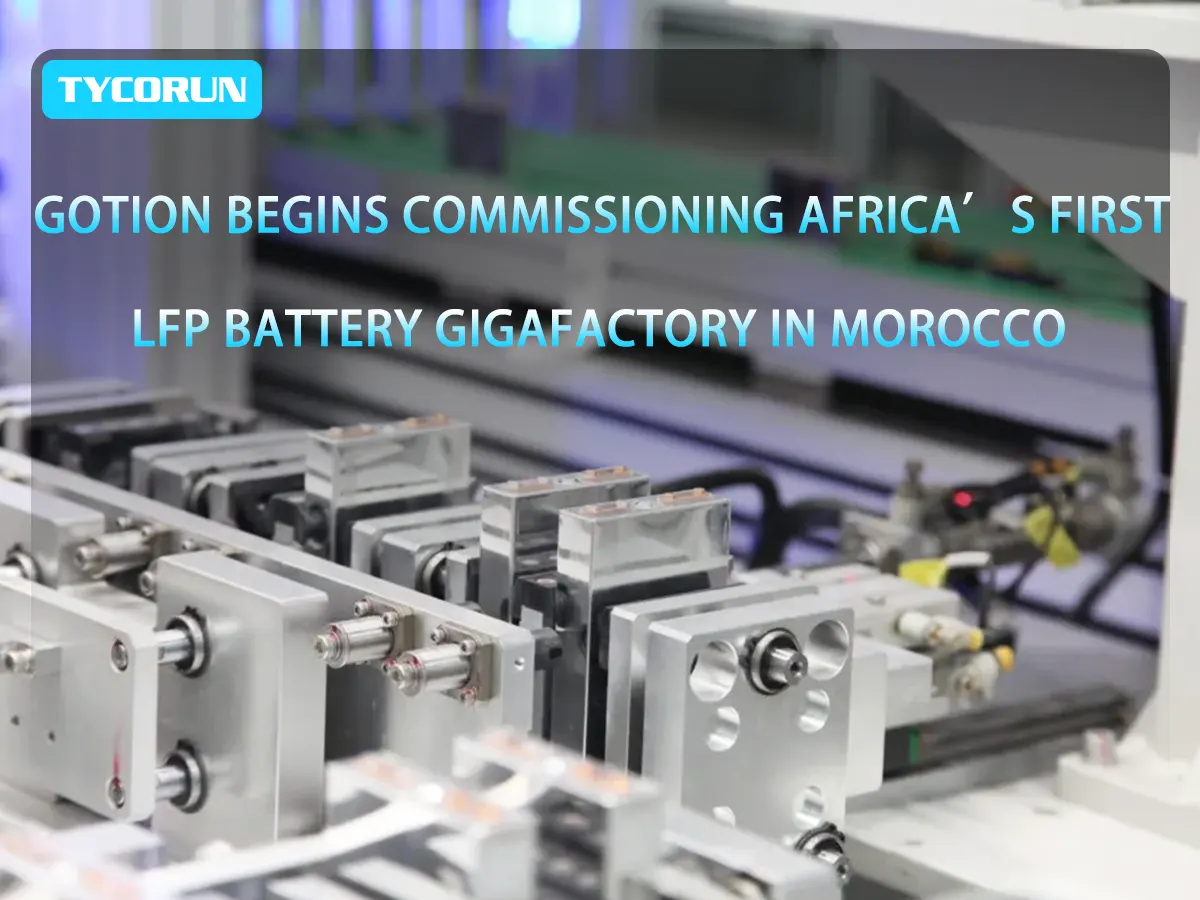
Gotion Power Morocco (GPM), the Moroccan subsidiary of China’s Gotion High-Tech, is starting up production equipment at its battery gigafactory in Kenitra during the week of October 20, 2026. The company describes the $1.3 billion first phase as the first lithium iron phosphate (LFP) battery gigafactory of its kind in Africa and the Middle East.
The milestone is an equipment startup, not the beginning of mass production. GPM president Khalid Qalam said the first cell line is set to run in October, with a second line following in November, and sales of assembled batteries are expected to start before the end of 2026.
What Is Actually Happening at the Plant
Commissioning means the production lines are being tested and verified before commercial output. According to GPM, the buildings and supporting infrastructure at the Atlantic Free Zone site were completed in roughly 13 months, after several thousand containers of production equipment were shipped from China.
GPM says the first phase is designed for 20 GWh a year of LFP cells, battery packs and energy storage systems, plus 100,000 tons of cathode material. The factory is intended to serve Morocco and the rest of Africa, as well as Europe, the Middle East and the United States.
The company has recruited more than 400 Moroccan employees so far, many of them engineers and technicians trained at Gotion sites in China, and projects more than 2,300 direct jobs at full build-out.
Two Different Capacity Figures
There is a reporting discrepancy buyers should be aware of. GPM and the Moroccan government put the first phase at 20 GWh. The African Development Bank (AfDB), which approved a €100 million loan for the project on July 24, 2026 and plans to mobilize up to €141 million more, described the first phase in its own July release as 10 GWh of cells and packs, scaling toward a longer-term 100 GWh target.
We have not found a published reconciliation of the two numbers from either GPM or the AfDB. The Moroccan government’s original 2024 investment agreement put phase one at 12.8 billion dirhams for 20 GWh, with total investment potentially reaching 65 billion dirhams if capacity is raised to 100 GWh.
Related Investment: the PowerCo Cathode Venture
On September 28, 2026, Volkswagen Group, its battery unit PowerCo and Gotion announced that they had agreed to set up three joint ventures— at Valencia in Spain, Šurany in Slovakia and Kenitra in Morocco — for LFP cells and cathode material, under a combined investment plan of about €3.22 billion. The Kenitra venture is planned to produce LFP cathode material at a rate of about 100,000 tons a year; according to Gotion’s board filing, Gotion would hold 51 percent and PowerCo 49 percent, and trade reports value it at roughly €480 million.
The agreement is subject to shareholder and regulatory approvals, and the Kenitra joint-venture company had not yet been incorporated at the time of the announcement. It is a separate entity from GPM’s first phase. We have not found a public explanation of how the planned venture relates to the 100,000 tons of cathode capacity in GPM’s own plan.
Why Buyers Are Watching Morocco
For battery and storage buyers, the Kenitra startup is part of a broader shift in where Chinese LFP capacity is being built. Rather than shipping every cell from China, manufacturers are adding regional plants close to European, African and Middle-Eastern demand, partly in response to freight costs, tariffs and incoming rules on carbon footprint and battery passports.
That context matters for landed cost. Our analysis of Benchmark Mineral Intelligence data showed that, at the pre-duty (CIF) level in September, a China-made 314Ah LFP cell landed at a higher price in North America than in Europe — and Benchmark attributed that specific gap to freight rather than tariffs. US import duties apply as a separate layer on top. Local production on Europe’s doorstep is one way manufacturers are trying to reduce that freight exposure.
Morocco’s appeal is geographic and industrial: free-zone sites, automotive supply chains already built around European carmakers, and trade access to both Europe and Africa. Whether Kenitra delivers on that promise depends on the ramp between equipment commissioning and stable, certified commercial output. For new cell plants, that ramp can take months.
What to Watch Next
The meaningful next milestones are not more construction announcements. Buyers should look for:
- Confirmation that the first line is producing qualified cells, not simply running
- Named offtake customers
- Certification of the LFP cells and packs
- A reconciliation of the 10 GWh and 20 GWh phase-one figures
Qalam described the October startup as “only a first step” in a project meant to structure Morocco’s battery industry. For teams specifying LFP cells or storage systems, the practical position has not changed yet: Kenitra is unlikely to be a supplier at scale in 2026, and the cell market is still served mainly by established Chinese production.
If you are comparing chemistries for a new project, our guide to LFP vs NCA battery chemistry covers the trade-offs. As a custom lithium-ion battery pack manufacturer, TYCORUN builds LiFePO4 packs and energy storage systems against current certified cell capacity, and we are monitoring how new regional supply like Kenitra alters lead times and pricing.
Fuentes
- Morocco World News, “Gotion to Launch Morocco’s First Battery Gigafactory in Kenitra the Week of October 20” (October 12, 2026)
- WINSS Solutions, “Gotion Begins Equipment Startup at Morocco’s First Battery Gigafactory” (October 16, 2026)
- Assahifa, “China’s Gotion to Start Up Africa’s First Battery Gigafactory in Morocco Next Week” (October 18, 2026)
- Volkswagen Group, “Volkswagen Group, PowerCo and Gotion Deepen Strategic Partnership” (September 28, 2026)
- Anadolu Agency, “Volkswagen, Chinese Battery-Maker Gotion Plan $3.66B Battery Investment in Europe, North Africa” (September 30, 2026)
- Zawya / African Development Bank, “African Development Bank Approves €100 Million to Gotion Power Morocco to Develop Africa’s First Lithium-Ion Phosphate Battery Gigafactory” (July 24, 2026)

Las normas UN38.3, IEC 62133-2 y el marcado CE tienen diferentes fines en materia de cumplimiento normativo. Esta guía explica qué abarca cada una de ellas, qué documentos hay que solicitar y cómo verificar el cumplimiento normativo de las baterías de litio antes de su envío o importación.

Rangos de parámetros habituales citados en el sector para cada fase de la producción de baterías de iones de litio, desde la mezcla de la pasta hasta la formación y el envejecimiento, destinados a ingenieros y equipos de control de calidad.

Qué hay que tener en cuenta antes de elegir un proveedor de baterías, desde la inspección del recubrimiento en línea y las pruebas de estanqueidad hasta las certificaciones y cómo interpretar las declaraciones sobre la vida útil.
Autores
-
Ver todas las entradas
Ryder es un especialista práctico en baterías de litio y autor de contenidos técnicos con más de cinco años de experiencia de campo en infraestructuras de movilidad eléctrica. Está especializado en pruebas de celdas, diagnósticos de paquetes y análisis del rendimiento del sistema de gestión de baterías (BMS) en el mundo real. Tras haber colaborado estrechamente con equipos de I+D de primer nivel, Ryder destaca en la evaluación de la seguridad de las baterías con respecto a estrictas normas mundiales como la UN38.3 y la IEC 62133. A través de sus artículos, pretende eliminar el ruido del marketing y ofrecer a los lectores una visión cruda y basada en datos sobre la seguridad, el rendimiento y la optimización de la vida útil de las baterías.
-
Ver todas las entradas
Meg es ingeniera de baterías con más de 10 años de experiencia en el sector del almacenamiento de energía. Es licenciada en Ingeniería Eléctrica y anteriormente trabajó como ingeniera de I+D en un fabricante de baterías de iones de litio, donde se centró en los sistemas de gestión de baterías (BMS), algoritmos de carga y pruebas de ciclo de vida para las químicas de plomo-ácido, AGM y litio. Ha contribuido al desarrollo de tecnologías de mantenimiento de baterías utilizadas en productos comerciales. En la actualidad, Meg se encarga de la revisión técnica de los contenidos sobre almacenamiento de energía para garantizar la precisión, la seguridad y el valor práctico para los lectores.