Last Updated on octubre 21, 2026
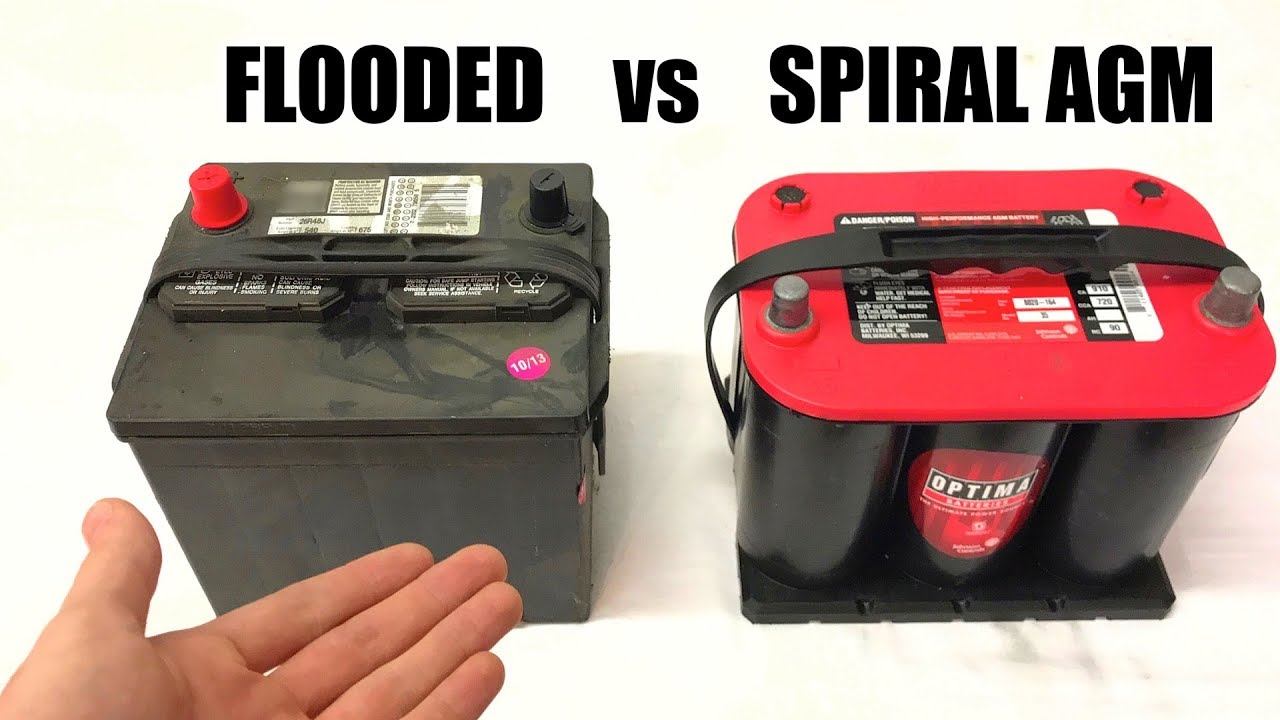
Choosing between an AGM and a flooded battery usually comes down to how you use the battery, how much maintenance you want to do and how much you are willing to spend. Both are lead-acid batteries, but they are built differently and behave differently in vehicles, RVs, boats and backup systems. This guide compares flooded vs AGM batteries on lifespan, cost, charging, compatibility and safety, so you can pick the right one.
Quick Answer: AGM or Flooded?
An AGM battery costs more up front, but it needs no maintenance, resists vibration, self-discharges more slowly and handles frequent cycling and fast charging better. A flooded battery costs less and works well in simple, low-demand setups where you can check the water level and keep the battery upright. If your vehicle has start-stop, heavy electrical loads or rough use, choose AGM. If you want the lowest purchase price and your setup is basic, flooded is still a valid choice.
| Característica | Flooded (wet cell) | AGM |
|---|---|---|
| Electrolito | Free liquid sulfuric acid | Acid absorbed in glass mat |
| Mantenimiento | May need distilled water top-ups | Ninguno |
| Typical price, 12 V 100 Ah deep-cycle (US retail) | About $90 to $150 | About $180 to $350 |
| Cycle life, deep-cycle type at 50% depth of discharge | Roughly 400 to 800 | Roughly 600 to 800 |
| Self-discharge per month | About 5% to 15% | About 1% to 3% |
| Cold cranking and cold storage | Capacity drops sharply in the cold | Lower internal resistance, holds charge in storage |
| Resistencia a las vibraciones | Fair | Bien |
| Riesgo de derrame | Higher if tilted or damaged | Low, spill-resistant |
| Charge acceptance | Moderado | Más alto |
| Mounting position | Upright only | More flexible, follow the maker’s guidance |
| Start-stop vehicles | Not suitable | Suitable (AGM or EFB required) |
| Lo mejor para | Basic vehicles, budget replacements, ventilated stationary use | Start-stop vehicles, RVs, boats, motorcycles, high-load or rough conditions |
Cycle counts come from manufacturer datasheets and Battery University summaries and are only comparable at the same depth of discharge (DoD). Prices are typical US retail ranges, not datasheet values, and change by brand, size and date, so check current listings before you buy. Sources are listed at the end of this page.
What Is a Flooded Battery?
A flooded battery, also called a wet cell or conventional lead-acid battery, has lead plates sitting in liquid sulfuric acid. Many designs have removable vent caps so you can top up distilled water as the electrolyte level drops. Some “maintenance-free” flooded batteries are sealed from the user’s point of view, but the acid is still free liquid, so they must stay upright.
Flooded batteries are the oldest and most common design. They are cheap, widely available and forgiving of some charging mistakes, because overcharging mostly boils off water that you can replace. But they lose water over time, self-discharge faster and are less comfortable with vibration, tilting and frequent deep discharge.
What Is an AGM Battery?
AGM stands for absorbent glass mat. The electrolyte is held in fine glass fiber mats pressed between the plates, so there is no free-flowing liquid. The battery is sealed and uses a valve to release gas only under abnormal pressure, which is why it is also called a valve-regulated lead-acid (VRLA) battery.
This construction gives AGM batteries lower internal resistance, better vibration resistance, no routine watering and a much lower risk of leaking. It also makes them more sensitive to overcharging, because water lost through the valve cannot be replaced. By design, AGM batteries are sealed and maintenance-free, with plates rigidly compressed to withstand heavy shock and vibration.
Key Differences Between AGM and Flooded Batteries
Vida útil y ciclo de vida
Cycle life varies dramatically based on plate construction and depth of discharge (DoD):
Deep-cycle lead-acid (flooded): Typically delivers 400–500 cycles at 50% DoD, or 1,000+ cycles at a shallow 30% DoD.
Starting batteries: Built with thin plates (~1 mm) for quick cranking current, managing only 100–120 cycles at 50% DoD.
Deep-cycle AGM: Heavy-duty plates (1.8–2.8 mm) yield 600–750 cycles at 50% DoD, reaching up to 1,500 cycles at 30% DoD.
A well-maintained flooded deep-cycle battery can rival an AGM on raw lab cycle counts. However, AGM excels in real-world duty cycles: faster recharge rates, better resilience to partial charging, zero maintenance, and superior vibration resistance. That makes AGM the longer-lasting choice for start-stop vehicles, commercial fleets, marine applications, and high-vibration off-grid setups.
Mantenimiento
Flooded batteries may need regular checks of the electrolyte level and periodic topping up with distilled water, plus cleaning of corrosion around the terminals. In hot climates or heavy cycling, a flooded battery can need watering every few months. AGM batteries need no watering, but terminals still need to be kept clean and tight.
Vibration and Physical Durability
The glass mat holds the plates firmly and the case is sealed, so AGM batteries cope better with vibration, bumps and off-road or marine use. Flooded batteries can suffer plate damage and acid spills under the same conditions.
Comportamiento de la carga
AGM batteries accept charge faster and recover more quickly after short trips or heavy loads, thanks to their lower internal resistance. They also need a charger or charging system suited to AGM. Charging at too high a voltage can dry out the mat and shorten life, because the lost water cannot be topped up. Charging limits differ between manufacturers and between models, so always follow the voltage and current limits printed on the battery or in its datasheet, and use an AGM-compatible charging mode.
Rendimiento en climas fríos
Cold reduces the usable capacity of every lead-acid battery, but AGM holds an advantage in two ways. Its lower internal resistance gives stronger cold cranking, so the engine turns over more easily on a frosty morning. Its much slower self-discharge also means a stored vehicle or boat keeps more charge through winter. A deeply discharged lead-acid battery of any type can freeze and crack its case, and AGM’s low self-discharge makes that less likely during storage.
Temperatura
Heat is hard on every lead-acid battery. A common industry rule of thumb is that service life roughly halves for every 8 to 10 °C (15 to 18 °F) above 25 °C, because corrosion and other aging reactions speed up with temperature. Flooded batteries lose water faster in hot engine bays, while AGM batteries are sealed but can be damaged by overcharging in heat. Neither type is clearly better in heat, so keep batteries away from heat sources and use proper charging.
Self-Discharge and Storage
AGM batteries self-discharge far more slowly than flooded ones. Victron rates its VRLA AGM at under 2% self-discharge per month at 20 °C, doubling for every 10 °C rise, while Trojan lists 5% to 15% per month for its flooded deep-cycle battery. This makes AGM the better choice for seasonal vehicles, standby generators and stored equipment. Even so, store any lead-acid battery fully charged and recharge it every few months, because a battery left partly discharged for long periods suffers permanent sulfation.
Where Does EFB Fit In?
EFB (enhanced flooded battery) is an upgraded flooded design built for entry-level start-stop vehicles. It sits between a standard flooded battery and an AGM battery in price and cycling ability. If your vehicle came with EFB, you can usually replace it with EFB or AGM, but not with a standard flooded battery. See our overview of flooded and EFB battery types for how the three compare.
Cost Comparison: Is AGM Worth the Extra Price?
In US retail, a typical 12 V 100 Ah deep-cycle flooded battery sells for about $90 to $150, while a comparable AGM unit runs about $180 to $350. For these sizes AGM often costs roughly 50% to 150% more up front, depending on brand and size. The gap is usually smaller in some automotive and commercial sizes, so check current prices for the exact model you need.
The better question is cost per year of service. Divide the purchase price by the expected years of service. If an AGM battery costs 60% more but lasts twice as long in your application, it is cheaper per year. If your vehicle has light loads and a simple charging system, a flooded battery may last long enough that the saving is real. Also factor in maintenance labor: watering and cleaning flooded batteries in a fleet takes time that AGM eliminates.
AGM is usually worth it when:
- The vehicle has start-stop or regenerative braking
- You make many short trips or run lots of accessories
- The battery sits in a spot that is hard to reach for watering
- The equipment vibrates, tilts or works outdoors (RVs, boats, off-road)
- The vehicle is stored for weeks or months at a time
Flooded is usually enough when:
- The vehicle is older and simple
- You can check the water level regularly
- Budget is the main constraint
- The battery stays upright and in a ventilated place
Can You Replace a Flooded Battery With AGM, or AGM With Flooded?
Flooded to AGM: Usually possible. Match the group size, terminal layout, cold cranking amps and capacity. Check that the charging system is compatible. Some vehicles also require the new battery to be registered with the battery management system so the charging strategy adapts. Check the vehicle manual or ask a technician.
AGM to flooded: Not recommended, especially for vehicles with start-stop, regenerative charging or high electrical loads. A flooded battery in a system designed for AGM can wear out much sooner and may trigger warning messages.
Same-type replacement is always the safest option if you are unsure.
How to Tell If You Have an AGM or Flooded Battery
- Check the label. Look for “AGM”, “VRLA” or “absorbent glass mat”.
- Look at the top. Removable caps usually mean a flooded battery. A flat sealed top may be AGM or a sealed flooded battery, so do not rely on this alone.
- Check the paperwork or the vehicle manual if the label is unclear.
- Do not open a sealed battery to check. Ask the supplier if you are still unsure.
¿Cuál elegir?
| Your situation | Una mejor opción |
|---|---|
| Car or motorcycle with start-stop or regenerative braking | AGM (or EFB if the maker allows) |
| Older vehicle, light use, tight budget | Inundado |
| RV, marine or off-road use with vibration | AGM |
| Backup power or solar storage with frequent cycling | AGM or deep-cycle flooded; consider LiFePO4 for daily cycling |
| Hard-to-reach battery location | AGM (no watering) |
| Vehicle stored for long periods or through winter | AGM |
| Cold climate with hard winter starts | AGM |
If your use involves frequent deep cycling, daily use and a long expected service life, it is also worth looking at LiFePO4 batteries, which offer 2,000 or more cycles and much lower weight but a higher upfront price. See our lead-acid vs lithium-ion comparison for the trade-offs.
Safety and Handling
Both battery types contain sulfuric acid and can release hydrogen gas during charging, so always charge in a ventilated area and keep sparks and flames away. Flooded batteries carry a higher risk of acid spills if tilted or damaged. AGM batteries are more spill-resistant, but a damaged case can still leak. Wear eye and skin protection when handling any lead-acid battery, and take used batteries to a certified recycler.
PREGUNTAS FRECUENTES
A flooded battery uses liquid acid and may need watering. An AGM battery holds the acid in a glass mat, is sealed and needs no watering.
For vibration resistance, maintenance-free use, cold cranking and frequent cycling, yes. For lowest purchase price in simple applications, flooded can be the better value.
Often yes in start-stop vehicles, RVs, boats and high-load use, but not always. A well-maintained deep-cycle flooded battery can match an AGM in cycle count. Lifespan depends on temperature, charging and use.
Only if the charger has an AGM-compatible profile or its limits match the battery's specification. Check the label and datasheet.
Yes. Lower internal resistance gives stronger cold cranking, and much lower self-discharge (about 1% to 3% per month versus 5% to 15% for flooded) helps stored vehicles keep their charge through winter.
Check the label for "AGM" or "VRLA" and look for removable vent caps, but confirm with the manual or supplier.
Automotive AGM batteries often pack in more, thinner plates to maximize cranking power and cycle life within a fixed case size, trading some capacity for power and durability. Compare datasheets rather than case size.
They are when the application demands it: start-stop vehicles, high electrical loads, vibration, and hard-to-reach or stored batteries. In simple, light-duty, budget-first setups, flooded often wins on value.
Need Help Choosing a Battery?
If you are specifying batteries for a vehicle, equipment or energy storage project, our team can help you compare AGM, flooded and lithium options for your load, cycle count and budget. Ponte en contacto con nuestro equipo para una consulta técnica.
Fuentes
- Battery University – BU-201: How does the Lead Acid Battery Work?
- Battery University – Can the Lead-acid Battery Compete in Modern Times?
- Victron Energy – GEL and AGM Batteries Datasheet [PDF]
- Victron Energy – Telecom Batteries Datasheet [PDF]
- Trojan Battery – T-105 Plus 6V Flooded Lead-Acid Battery
- Yuasa – YTX9-BS 12V AGM Motorcycle Battery
- GS Yuasa – Motorcycle and Powersport Batteries Catalogue [PDF]

Las baterías AGM y las de litio se diferencian en cuanto a capacidad útil, vida útil, peso, comportamiento de carga y valor a largo plazo. Esta guía compara ambas tecnologías, explica los comprobaciones de compatibilidad que debes realizar antes de sustituir una batería AGM por una de litio y te ayuda a decidir cuál se adapta mejor a tu aplicación.

En este artículo, vamos a cubrir la guía de carga de la batería AGM en detalle, a partir de la comprensión de lo que es una batería AGM, por qué el método de carga correcto es tan importante, pasos seguros, a algunos errores comunes de carga que se deben evitar al cargar una batería AGM.

En este artículo, analizaremos las principales diferencias entre la batería AGM y la batería de gel, incluidos sus pros y sus contras, y cómo elegir la más adecuada en función de sus necesidades.
Autores
-
Ver todas las entradas
Ryder es un especialista práctico en baterías de litio y autor de contenidos técnicos con más de cinco años de experiencia de campo en infraestructuras de movilidad eléctrica. Está especializado en pruebas de celdas, diagnósticos de paquetes y análisis del rendimiento del sistema de gestión de baterías (BMS) en el mundo real. Tras haber colaborado estrechamente con equipos de I+D de primer nivel, Ryder destaca en la evaluación de la seguridad de las baterías con respecto a estrictas normas mundiales como la UN38.3 y la IEC 62133. A través de sus artículos, pretende eliminar el ruido del marketing y ofrecer a los lectores una visión cruda y basada en datos sobre la seguridad, el rendimiento y la optimización de la vida útil de las baterías.
-
Ver todas las entradas
Meg es ingeniera de baterías con más de 10 años de experiencia en el sector del almacenamiento de energía. Es licenciada en Ingeniería Eléctrica y anteriormente trabajó como ingeniera de I+D en un fabricante de baterías de iones de litio, donde se centró en los sistemas de gestión de baterías (BMS), algoritmos de carga y pruebas de ciclo de vida para las químicas de plomo-ácido, AGM y litio. Ha contribuido al desarrollo de tecnologías de mantenimiento de baterías utilizadas en productos comerciales. En la actualidad, Meg se encarga de la revisión técnica de los contenidos sobre almacenamiento de energía para garantizar la precisión, la seguridad y el valor práctico para los lectores.