
Can You Put an External BMS on a Lithium Battery?

An external BMS offers flexibility and advanced monitoring capabilities, making it a practical choice for applications requiring customization or higher capacity systems. But can you put an external BMS on a lithium battery? The answer is yes.

Author :

Reviewers:

Can You Put an External BMS on a Lithium Battery

Last Updated on February 21, 2025
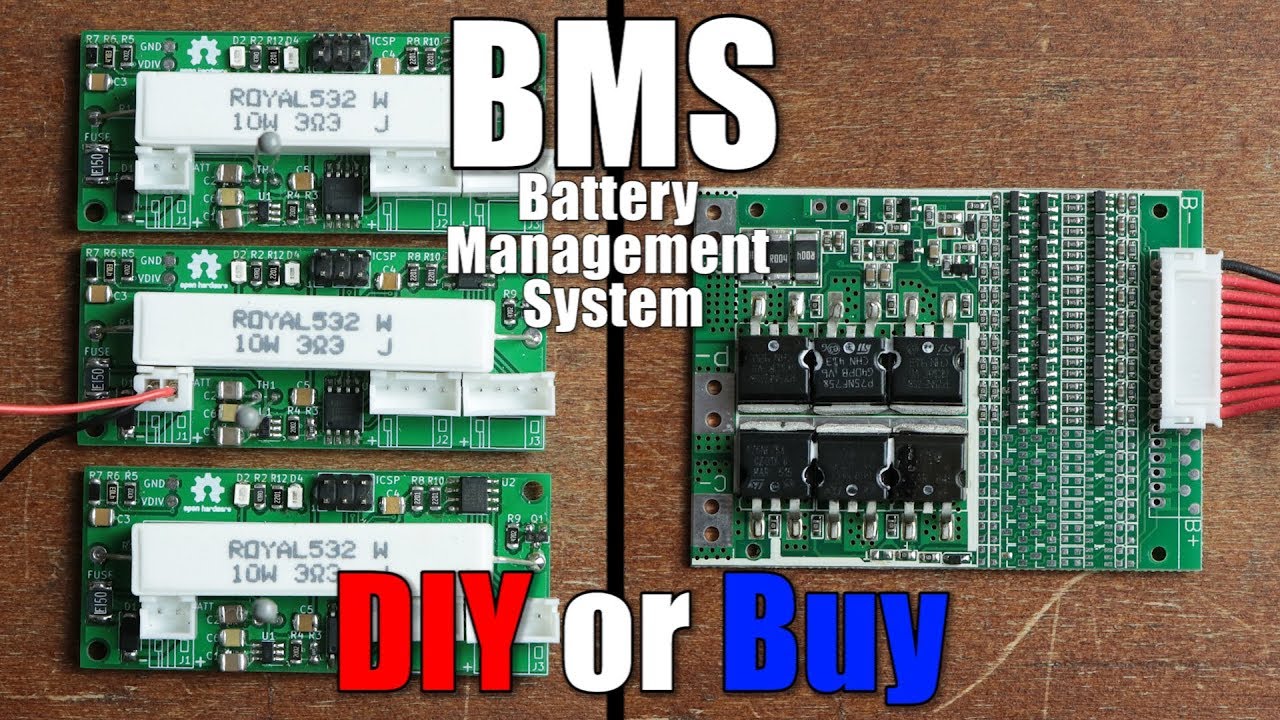

A Battery Management System (BMS) is essential for the safe and efficient operation of lithium batteries. An external BMS offers flexibility and advanced monitoring capabilities, making it a practical choice for applications requiring customization or higher capacity systems. But can you put an external BMS on a lithium battery? The answer is yes, and this article explores the key considerations, advantages, and implementation tips for using one effectively.

Table of Contents
    Add a header to begin generating the table of contents
    YouTube_play_button_icon

    Key Considerations for Using an External BMS

    • Compatibility: Ensure the external BMS is compatible with your specific lithium battery chemistry, such as LiFePO4 or Li-ion. It’s crucial that voltage thresholds, current limits, and communication protocols are aligned between the BMS and the battery.
    • Sizing the BMS: Select a BMS that matches the voltage and current requirements of your battery pack. Opting for a BMS with a higher rating can provide added durability, especially under high-load conditions.
    • Connection Requirements: Proper wiring and secure connections are vital. Typically, external BMS units need to be connected to battery terminals, include sense wires for cell monitoring, and have communication interfaces for data exchange.

    Advantages of an External BMS

    An external BMS offers several benefits:
    • Enhanced Monitoring: Provides real-time data on cell voltages, temperatures, and overall battery health.
    • Customizability: Allows for tailored settings to meet specific application needs.
    • Scalability: Suitable for both small-scale and large-scale battery systems.
    • Improved Safety: eatures protective measures against overcharging, over-discharging, and short circuits.
    Can You Put an External BMS on a Lithium Battery

    Implementing an External BMS

    To effectively integrate an external BMS:
    • Plan Wiring and Layout: Organize the battery pack and BMS placement to minimize wire lengths and ensure safety.
    • Configure BMS Parameters: Program the BMS with appropriate voltage, current, and temperature settings specific to your battery.
    • Integrate Safety Mechanisms: Include fuses, circuit breakers, or disconnects for additional protection against overcurrent or short circuits.
    • Perform Thorough Testing: Monitor cell behavior under various loads and conditions to validate the setup.
    • Maintain Regular Inspections: Periodically check connections, calibration, and software updates to ensure optimal performance.

    Practical Applications of an External BMS

    External BMS units are particularly valuable in:

    • Solar Energy Systems: Providing precise control over large-scale lithium battery banks to ensure consistent performance.
    • Electric Vehicles: Managing high-current loads and integrating with vehicle control systems. Can implemented for ev motorcycle battery pack
    • DIY Energy Projects: Offering customizability and ease of use for hobbyists and engineers. For the example like custom lithium ion battery pack

    Advanced Monitoring with External BMS

    An external BMS helps improve battery performance by checking important details in real time. This is very important for systems that need careful control and safety. For example, it helps with:
    • Cell Balancing – It keeps all battery cells at the same voltage, so none get too much or too little charge. This helps the battery last longer.
    • Thermal Management – It watches the battery’s temperature to stop it from getting too hot or too cold, which can cause damage.
    • State of Charge (SOC) – It shows how much battery power is left, making it easier to manage energy use efficiently.
    Can You Put an External BMS on a Lithium Battery

    Why Real-Time Data Matters

    Real-time data makes the battery safer to use and helps it last longer. By keeping track of voltage, current, and temperature, users can:

    • Prevent Overstress – It stops the battery from working too hard, which can wear it out faster.
    • Optimize Performance – It adjusts settings to make sure the battery works as efficiently as possible.
    • Plan Maintenance – It finds problems early, so repairs can be done in time, reducing downtime and extra costs. 
    Real-time voltage monitoring chart

    Safety Features of an External BMS

    An external BMS makes lithium batteries much safer by adding several protective features:
  1. Overvoltage Protection – It stops the battery from getting too much charge, which helps prevent overheating and damage.
  2. Undervoltage Protection – It prevents the battery from losing too much charge, which could permanently harm it.
  3. Overcurrent Protection – It controls the flow of electricity to avoid too much current during charging or use.
  4. Temperature Management – It checks the temperature and disconnects the battery if it gets too hot or too cold.
  5. These protections help keep the battery reliable and make it last longer.
    Safety features of BMS for lithium battery

    Common Issues Addressed by External BMS

    Issue Description Solution provided by BMS
    Over-voltage Battery voltage exceeds the safe limit, risking damage. Monitors and disconnects the battery when voltage exceeds preset threshold.
    Under-voltage Battery voltage drops too low, leading to possible irreversible damage. Shuts down or prevents further discharge below a set voltage level.
    Over-temperature Excessive heat can degrade battery performance and safety. Monitors temperature and disconnects

    Best Practices for External BMS Integration

  6. Check Battery Condition – Make sure all battery cells have the right voltage and capacity before connecting the BMS.
  7. Ensure Proper Insulation – Use heat-resistant materials and secure the wiring to prevent short circuits.
  8. Calibrate Regularly – Adjust the BMS settings from time to time to keep it accurate.
  9. Choose Quality Parts – Use certified, high-quality components to avoid system failures.
  10. With the right external BMS, your battery system will be safer, perform better, and last longer. Adding an external BMS to a lithium battery pack is a great way to improve safety, efficiency, and lifespan. Choosing a compatible system, following best practices, and using advanced BMS features will ensure smooth and reliable operation. Whether for solar energy storage or electric vehicles, an external BMS is more than just a safety feature—it is an important tool for making your battery system stronger and more efficient.

    Frequently asked questions

    No, the external BMS must be compatible with the specific battery chemistry, voltage, and current requirements of your lithium battery pack.

    The BMS connects to battery terminals, sense wires for individual cells, and sometimes communication interfaces like CAN bus or Bluetooth, following the manufacturer's wiring instructions.
    Yes, by managing cell balancing, voltage thresholds, and temperature, an external BMS helps prevent damage and extends the overall battery lifespan.
    YouTube_play_button_icon

    Who We Are

    With over 17 years of experience, TYCORUN is a leading lithium battery manufacturers committed to driving innovation and development of battery technology, and the company’s current business covers two-wheeled and three-wheeled, four-wheeled power batteries, energy storage batteries, inverters, battery swap cabinets and motorcycles. Its products are widely used in Europe, the Middle East, and Africa.

    The company provides customized battery services, from cells to complete systems, and holds certifications like ISO9001, CE, TUV, and UL. TYCORUN has developed solid-state low-temperature batteries for better performance in cold conditions and uses advanced BMS algorithms for safety and longer life. It also prioritizes sustainability with low-pollution materials and eco-friendly production.

    Authors

    • Caroline

      Hi, I am Caroline. Right now, I mainly edit articles about lithium batteries and related parts. I'm focused on providing services and solutions for different industries using lithium batteries, and I keep up with the latest news on the topic. I look forward to collaborating with you all to advance the new energy industry!

      View all posts
    • Meg

      Meg is a battery engineer with 10+ years of experience in the energy storage industry. She holds a B.S. in Electrical Engineering and previously worked as an R&D engineer at a lithium-ion battery manufacturer, where she focused on battery management systems (BMS), charging algorithms, and life-cycle testing for lead-acid, AGM, and lithium chemistries. She has contributed to the development of battery maintenance technologies used in commercial products. Meg now provides technical review for energy storage content to ensure accuracy, safety, and practical value for readers.

      View all posts
    Table of Contents
      Add a header to begin generating the table of contents

      You Might Also Like...

      How to Convert Amp Hours to Watt Hours (Ah to Wh Calculator and Chart)

      How to Convert Amp Hours to Watt Hours (Ah to Wh Calculator and Chart)

      Convert amp hours to watt hours with one formula: Wh = Ah × V. This guide gives you a calculator, lookup charts from 12V to ...
      Lithium Battery for RV Off-Grid Sizing and Cold Charging

      Lithium Battery for RV: Off-Grid Sizing and Cold Charging

      Planning an off-grid RV trip or camping in winter? Find out how much battery capacity you need, how to match it to your appliances, and ...
      Ganfeng Begins 588Ah Storage Cell Ramp; 648Ah Planned for 2027

      Ganfeng Ramps 588Ah Storage Cells, 648Ah Due 2027

      Ganfeng LiEnergy has moved its 588Ah storage cell line into production ramp and scheduled a 648Ah cell for 2027. This article converts the new formats ...
      EU Battery Passport 2027 Requirements for LMT and Energy Storage Batteries

      EU Battery Passport 2027: Requirements for LMT and Energy Storage Batteries

      From 18 February 2027, LMT batteries, EV batteries and industrial batteries above 2 kWh need an EU battery passport. See what the record contains, who ...
      EU Battery Regulation 20231542 What Battery Buyers Need to Know

      EU Battery Regulation 2023/1542: What Battery Buyers Need to Know

      A buyer’s breakdown of Regulation (EU) 2023/1542 for e-mobility and stationary storage. Learn how LMT and industrial batteries are classified, what applies from CE marking ...
      Lithium Battery vs Lithium-Ion Battery What’s the Real Difference

      Lithium Battery vs Lithium-Ion Battery: What’s the Real Difference?

      Lithium vs lithium-ion mostly comes down to single-use versus rechargeable. Here is how to read the label, compare voltage and shelf life, and pick the ...



