
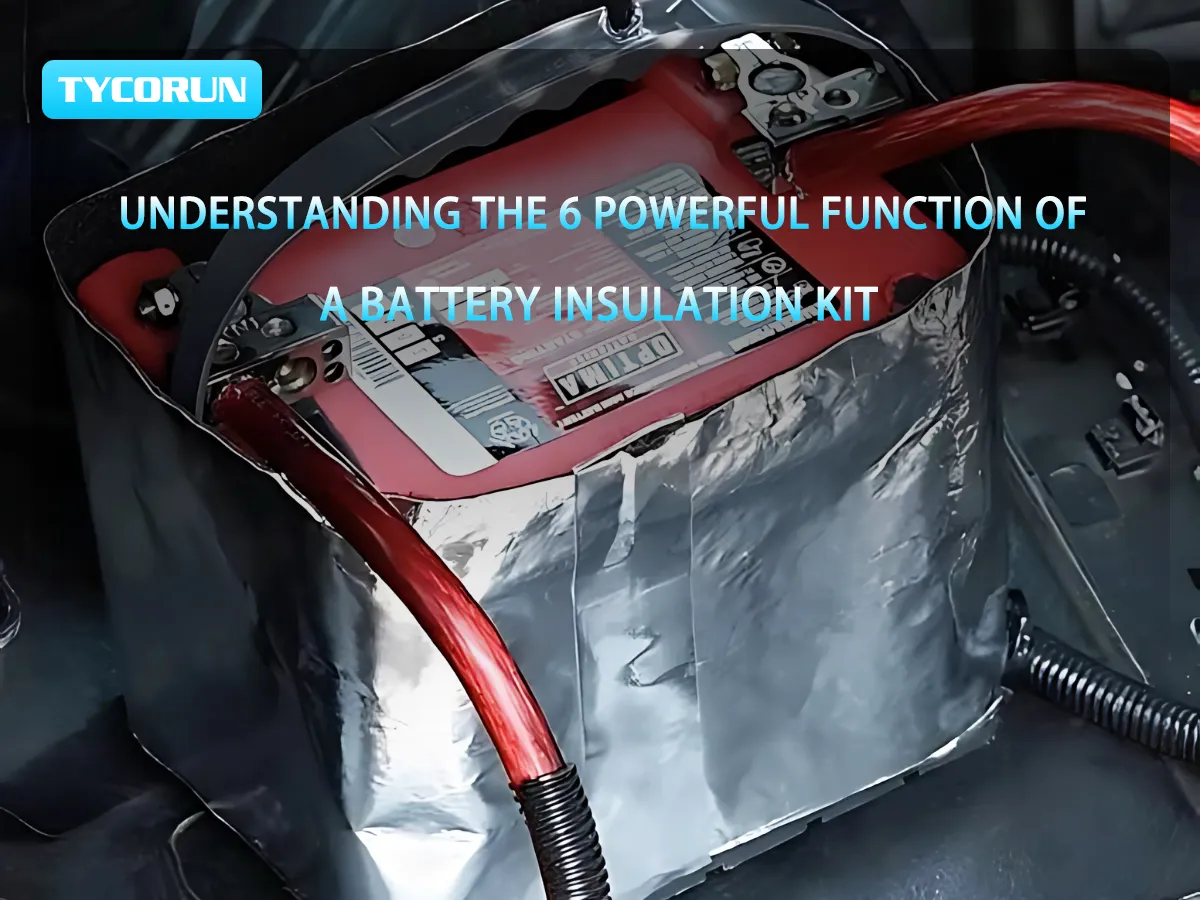

Technically, in extreme weather conditions, battery performance can decrease drastically in various applications, ranging from vehicles, electronic devices, and various energy storage systems. Furthermore, if the battery is continuously exposed to these extreme temperatures, it can affect its battery efficiency and even accelerate battery degradation to permanent damage. Therefore, to prevent this from happening faster, many users use battery insulation kit as an effective thermal protection.
Battery insulation kit are specially designed to keep the battery temperature stable, both when the battery is being used or not. Because as we know that various battery types have a fairly high level of sensitivity to extreme temperatures. Therefore, with proper protection, batteries can work optimally at extreme temperatures and have considerably longer lifespans. Thus, the use of tools such as battery insulation kit can be one of the right actions to prevent the battery from being damaged due to extreme temperature fluctuations.
To understand further what a battery insulation kit is, in this article we’ll discuss it in detail. This article will discuss starting from the definition, functions and benefits, types, how to work, to guidelines for choosing the most appropriate battery insulation kit.
What is Battery Insulation Kit?
Battery insulation kit is basically a protective device specifically designed to protect the battery from extreme temperatures, humidity, or even vibrations. This kit is known to be widely used in vehicle batteries–both electric vehicles and vehicles with start-stop systems–electronic devices, to renewable energy systems. Usually the battery insulation kit itself consists of thermal insulation foam, special battery covers that are resistant to water or heat, straps or adhesives, and installation instructions.
The use of this kit is generally essential, especially for battery users who live in areas with unpredictable weather. Without this kit, it’s possible for batteries to experience battery damage much faster in extreme temperatures, be susceptible to moisture or dust that can trigger corrosion, and experience fluctuating capacity conditions. However, by using this protection kit, the previously mentioned problems can be eliminated and our batteries will continue to work optimally in various environmental conditions.
The Battery Insulation Kit Functions and Benefits
Basically, environmental temperatures which are too extreme can reduce the battery’s efficiency level and can even damage it permanently. Therefore, a battery insulation kit that has been designed to protect the battery from extreme temperatures can be used as a solution in protecting the battery thermally and physically. However, apart from being a protective device, this kit also has various other functions and benefits as follows.
- Stabilize Battery Temperature
Battery insulation kit can help the battery to keep its temperature within normal limits, so it can avoid various problems such as voltage drop, overheat, or even battery thermal runaway which can be dangerous.
- Reducing the Impact of the Physical Environment
This kit is also able to protect the battery from various physical environmental impacts such as dust, dirt, water spills, vibrations, and light impacts. Thus, the battery can work and be used much longer optimally.
- Extends Battery Life
Batteries that are protected from unstable or extreme temperature fluctuations will often have a much longer battery life cycle.
- Higher Energy Efficiency
A battery temperature that stays within its normal range will make the battery work more efficient, so the energy wasted due to internal resistance will be lower.
- Long- Term Cost Savings
Batteries protected by a battery insulation kit will usually have a longer lifespan as they are protected from extreme environmental conditions. Therefore, this can make users save much more on battery replacement costs or maintenance.
- Flexible and Easy to Install
Generally, battery insulation kit is available in various sizes and shapes, and are very easy to install even by beginners.
Types of Battery Insulation Kit
To maintain battery performance for a long time in various environmental conditions, battery insulation kit is commonly used as a reliable and effective solution in this situation. However, as previously known, this kit consists of various types that are tailored to the size, usage environment, and battery type. Therefore, understanding the various types of battery insulation kit available can help us to choose the most appropriate type for the battery system we have. Then, what types of battery insulation kit exist on the market today? The following is a complete discussion.
Thermal Wrap Kit
Generally, this type of kit is made of thermal insulation foam, NBR/ PVC, or even coated aluminum foil. This type function is as a battery temperature stabilizer when extreme temperatures hit. Thermal wrap kits themselves are usually widely used for electric cars, solar power systems, and also UPS.
Hard-Shell Insulation Box
Hard-shell insulation boxes have a hard design and are covered by insulation on the inside. Usually this box will be made of heat-resistant plastic, fiberglass, or even insulated lightweight metal. This type generally provides a variety of reliability such as providing batteries with comprehensive protection from extreme temperatures, impact, and moisture. Because of its reliability, this type is often used for outdoor batteries or large-scale energy projects.
Battery Blanket (Electric Heating Pad)
Battery blanket is a kit that equipped with heating elements that need to be connected to an external power source. This type functions to keep the battery warm when the ambient temperature is too low in order to keep it working optimally. Because of this function, battery blankets are usually widely used in countries that have extreme winters or for outdoor vehicle use.
Self-Adhesive Insulation Sheet
This type is designed to be flexible and very simple with an adhesive layer on one side. Using self-adhesive insulation sheet itself is very easy, which can be installed directly on the surface or battery case. Because of this ease of use, making this battery insulation kit type widely used in DIY systems, households, or even large-scale power banks.
Custom Fit Battery Insulation Kit
Specifically designed to follow the shape and size of certain battery types (e.g. forklift battery). This type generally has very high precision, maximum performance, to a very neat appearance. Due to its reliability in adjusting the battery shape and size, this kit is widely used in factory electric vehicles or professional installations.
Waterproof Insulated Pouch
This battery insulation kit is in the form of a bag or pouch with insulating material and added with a waterproof layer. Due to its reliability in preventing the battery from being exposed to water, the use of this type is massive in portable power stations, camping devices, drones, and outdoor gadgets.
How Battery Insulation Kit Works
Battery insulation kit basically work in several stages when maintaining battery temperature stability. Therefore, understanding the stages of how this kit works will help you to better understand why this kit can increase battery efficiency and extend its service life. Here are some of the stages of how the battery insulation kit works.
- Insulating External Temperature: The insulation material in the battery insulation kit basically serves to prevent extreme temperatures–whether cold or hot–from entering the battery.
- Keeps the Internal Temperature Stable: The battery insulation kit will continue to keep the battery within its normal temperature range of around 20°C to 25°C for maximum performance.
- Protects the Physical Batteries: In addition to keeping the battery temperature stable, the kit’s weatherproof coating also protects the physical battery from dust, water, moisture, and vibration.
- Provides Active Heat (If Heater Mode is On): Some insulation kits are known to come with an electric heater to keep the batteries warm in extreme temperatures.
Guide to Choosing Battery Insulation Kit
Maintaining a stable battery condition in various environmental conditions is generally very important to ensure that the system or device connected to the battery works optimally for a long time. It’s known for sure, that one of the solutions that battery system owners can do to prevent battery deterioration during uncertain weather conditions is to use a battery insulation kit.
However, due to the many types and sizes that this tool offers, choosing a battery insulation kit requires attention and suitability for the right battery type and environment. Therefore, in this session we’ll discuss the guidelines in choosing a battery insulation kit that best suits your current system.
- Determine the Type of Battery and Application
Make sure that you know exactly what type of battery you’re using in your system or application. It’s because, the battery type and application are very important to choose the right type of kit. For example, lithium batteries for electric vehicle applications are more suitable for using high-quality thermal wrap kits with aluminum coating.
- Pay Attention to Temperature and Environmental Conditions
Pay attention to where the battery is installed, whether it’s often exposed to extreme cold, excessive heat, or even high humidity. If so, then choose a type of insulation kit with high thermal insulation or even one that is equipped with an electric heater.
- Choose the Right Insulation Material
To protect the battery from extreme temperatures, make sure you choose insulation that uses EVA foam, NBR/ PVC blend, or aluminum foil insulation. As for protection from water and dust you can choose the insulation type that has been equipped with a waterproof and dustproof layer.
- Check Size and Compatibility
Take measurements of the battery dimensions that will be covered by the battery insulation kit and ensure that you buy insulation that can cover all sides of the battery thoroughly. Basically, custom-fit kits are much more suitable and will look nicer, but universal-fit kits are also much more flexible.
- Ease of Installation
Ensure that you have a kit with an easy-to-install design such as self-adhesive sheets and avoid buying insulation kits that require special tools to install. This is particularly important if you intend to install the kit yourself at home.
- Additional Protection Levels
Some kits are known to be integrated with additional protection systems such as vibration resistance, flame retardant shields, or heat reflectors. Therefore, if you require any of the additional protection mentioned above, then when purchasing look at the specifications of the insulation kit first.
- Consider Price and Quality
Cheap kits usually don’t have a long service life in extreme conditions, so make sure to choose a product that has good reviews, a warranty, and also clear specifications.
Conclusion
Based on the discussion above, it can be seen that the battery insulation kit is an important solution to maintain the battery’s performance and durability in various environmental conditions. With its reliability in maintaining temperature stability, protecting the battery from moisture, and also physical damage, the battery insulation kit can help provide a much better experience when using the battery system. However, it should also be understood that the selection of the right and appropriate insulation kit must be considered to get maximum reliability and reduce the risk of damage that may arise.
Frequently asked questions
Covering batteries with insulation basically aims to keep the battery temperature stable, safer, durable, and work optimally in various environmental conditions.
Generally, not all types of batteries need insulation kits, only batteries that are used in extreme environments need them to maintain their performance and safety.
Battery insulation kit can generally last around 3 to 5 years of use, but it depends on the quality of the material, the intensity of use, and the environmental conditions faced.
Who We Are
With over 17 years of experience, TYCORUN is a leading lithium battery supplier committed to driving innovation and development of battery technology. Our diverse product range includes two/three/four-wheeled power batteries, energy storage systems, one stop battery swap systems, inverters, and electric motorcycles. These high-quality solutions are trusted in Europe, the Middle East, and Africa.
We provide customized battery services, from cells to complete systems, and holds certifications like ISO9001, CE, TUV, and UL. TYCORUN has developed solid-state batteries for better performance and uses advanced BMS algorithms for safety and longer life.Â
TYCORUN’s global reach is strengthened through our strategic partnership with Ganfeng, a top-five Chinese battery manufacturer. This collaboration offers us professional technology and production support. We fully manage Ganfeng’s overseas battery business and have collaborated to mass sell swappable, power, and energy storage batteries to Thailand, Dubai, Egypt, South Africa, Saudi Arabia, etc.

Because of its reliability, in this article, we’ll discuss in-depth what a LiPo safe bag is, starting from the benefits of its use, the right time to use it, as well as common mistakes in using LiPo safe bags.

In this article, we’ll dive deep into some tips on how to protect car battery from winter. The discussion will start from the effects of winter on car batteries, bad battery signs in winter, effective steps on how to protect car batteries from winter, to signs you need a battery change before winter.

Therefore, this article will discuss do batteries last longer in the fridge, beginning with an understanding of the types of batteries, the core discussion of the article, the risks associated with storing batteries in the refrigerator, and the correct storage tips.
Authors
-
View all posts
Anastasia is a dedicated renewable energy researcher and technical writer specializing in inverters, home energy storage solutions, and clean energy trends. With a sharp eye for market analysis and industry shifts, she transforms complex technical concepts into actionable, easy-to-understand insights. Her goal is to empower homeowners and businesses alike to make highly informed decisions regarding sustainable energy deployment.
-
View all posts
Meg is a battery engineer with 10+ years of experience in the energy storage industry. She holds a B.S. in Electrical Engineering and previously worked as an R&D engineer at a lithium-ion battery manufacturer, where she focused on battery management systems (BMS), charging algorithms, and life-cycle testing for lead-acid, AGM, and lithium chemistries. She has contributed to the development of battery maintenance technologies used in commercial products. Meg now provides technical review for energy storage content to ensure accuracy, safety, and practical value for readers.





