Skip to content


Last Updated on May 18, 2026
If you have ever pulled a swollen battery out of your laptop, felt your phone run unusually hot, or struggled to start your motorcycle on a cold winter morning, you have seen battery damage in action. But what exactly happens inside a battery when it fails—and how do you know when it is time to replace it before a serious safety incident occurs?
This guide covers the practical side: how to spot damage, what causes it, and how to handle it safely. Whether you manage delivery fleets, shared mobility services, or just want your own devices to last longer, you’ll find actionable answers here.
Quick Takeaways
Before we dive deep, here are the most important things to remember about battery damage:
- Heat is the number one enemy. High temperatures accelerate chemical degradation, permanently reducing battery capacity and increasing safety risks.
- Physical damage is a red flag. Swelling, cracking, leaking, or unusual heat means stop using the battery immediately.
- Deep discharges cause irreversible harm. Letting a lithium battery drain completely—especially repeatedly—damages its internal structure.
- Dendrites are microscopic but deadly. These needle-like formations can pierce the separator inside a battery and trigger a fire or explosion.
- Damaged batteries do not belong in household trash. They require special handling to prevent fires in garbage trucks and recycling facilities.
Key takeaway: A battery is not truly “bad” when it stops working; it is bad when it can no longer deliver stable power under load.
If your battery shows any sign of swelling, unusual heat, or persistent underperformance, stop using it immediately and follow the safe disposal steps later in this guide.


How to Tell If Your Battery Is Damaged
Battery damage rarely announces itself with a single dramatic event. Instead, it sends subtle—but unmistakable—signals long before catastrophic failure.
The Visual Checklist
Inspect your batteries regularly for these warning signs:
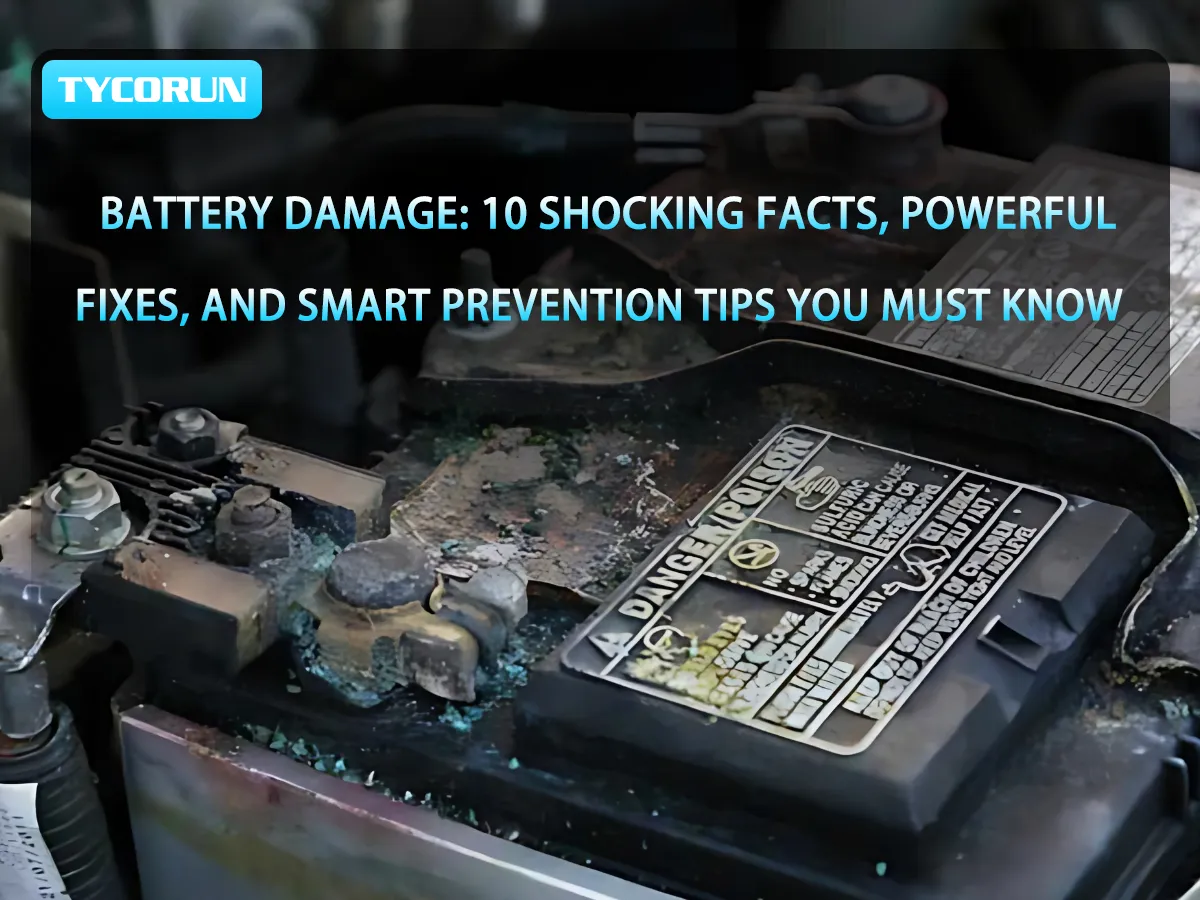
- Swelling or bulging: Any visible expansion of the battery casing indicates internal gas buildup. For lead-acid batteries, swelling usually signals overcharging; for lithium-based batteries, it often points to thermal runaway developing inside. A swollen battery is dangerous—stop using it immediately.
- Cracks or splits: Moisture and contaminants can enter, accelerating corrosion and short circuits.
- Leaking fluid: Puddles, stains, rotten egg smell (lead-acid) or sweet solvent odor (lithium). Electrolyte escape is a serious hazard.
- Corroded terminals: White, green, or blue crust increases resistance. One study found terminal issues cause 22% of “dead battery” complaints[1].

Performance Indicators That Matter
- Slow cranking (vehicles): A healthy 12V battery maintains at least 9.6V during cranking; below 7V confirms failure.
- Dimming lights or erratic power: Lithium devices that shut down with charge remaining often have high internal resistance or cell imbalance[7].
- Rapid self-discharge: Losing charge quickly when unused points to internal leakage.
- Unusual heat during charging or use: Above 50°C (122°F) – stop and let cool in a safe, non-flammable area.
Testing Battery Health with Simple Tools
A digital multimeter (under $20) reveals a lot:
- Open-circuit voltage (OCV): After 30 minutes rest with no load, a 12V lead-acid battery below 12.4V suggests degradation.
- Load test: Voltage drop of more than 2V under light load indicates worn cells.
For lithium batteries, Direct Current Internal Resistance (DCIR) is a key health indicator. As batteries age, internal resistance rises. If your battery “looks” fully charged but cannot deliver sustained power, its internal resistance is likely too high[2].
Real-time monitoring in practice: In commercial fleet operations, waiting for failure is expensive. Battery swapping systems with live DCIR and temperature tracking allow operators to isolate a risky battery before it escalates. This is how we help fleets at TYCORUN – catching problems early, not after downtime.
Common Misconceptions About Battery Damage
Clear up three frequent mistakes:
- “The lights come on, so the battery must be fine.”
Reality: A battery can power small loads and still fail under heavy load. Always test voltage under load, not at idle.
- “If it’s not swollen, it’s safe.”
Reality: Dangerous internal damage can exist without visible swelling. High internal resistance and lithium plating may show no external signs until failure is imminent.
- “Batteries die slowly and predictably.”
Reality: Degradation is nonlinear. Aged cells can trigger thermal runaway at lower temperatures than fresh ones. A battery that worked last month could fail catastrophically next week.
Key takeaway: Swelling is not a cosmetic issue. It is a structural warning that internal gas has already built up inside the cell.

The Science of Battery Damage (Simplified)
| Failure mechanism | What happens | Why it matters |
|---|---|---|
| Lithium dendrites | Needle-like lithium deposits pierce the separator | Creates internal short circuit, can trigger fire |
| SEI layer degradation | Protective film on anode breaks down under heat/overcharge | Accelerates gas generation and heat buildup |
| Thermal runaway | Self-sustaining chain reaction releases oxygen from cathode | Leads to violent fire, explosion, toxic gases |
How they work together:
Overcharging, fast charging in the cold, or high temperatures can start dendrites and SEI breakdown. Once the cathode releases oxygen, thermal runaway becomes unstoppable with ordinary extinguishers.
For most users, the takeaway is simple: prevent overheating, overcharging, and deep discharge to avoid these chains.
What Damages Batteries: The Five Main Culprits
Extreme Temperatures
Heat is the NO.1 enemy. It accelerates capacity loss and SEI breakdown.
- A car battery in a hot summer parking lot can lose 30% of its life in one season.
- E‑bike batteries in direct sunlight degrade much faster.
Cold doesn’t permanently damage lithium like heat does, but charging below 0°C (32°F) causes lithium plating – permanent dendrite damage.
Overcharging and High Current
Overcharging forces excess lithium into the anode, forming dendrites. Cheap chargers can bypass BMS protection. Fast charging itself is safe under normal conditions, but repeated high‑current charging in cold or hot temperatures accelerates wear.
Deep Discharge (0%)
Letting a lithium battery hit 0% causes cumulative, irreversible stress. For lead-acid, it causes sulfation (hard crystals on plates). For lithium, it can trigger BMS lockout.
Physical Stress and Vibration
Unsecured batteries in vehicles suffer broken internal connections. One documented case: a loose battery was held only by its cables – internal connections failed, voltage dropped to 1.1V.
Age and Manufacturing Defects
Lead-acid: 3–5 years. Lithium: 8–12 years under ideal conditions. Defects (contaminants, uneven coatings) can cause premature failure.
Key takeaway: The 40-80 rule is not about perfect charging. It is about reducing voltage stress while keeping the battery in its healthiest operating window.
Special Considerations for Different Applications
Electric Vehicles (EVs) and High-Voltage Packs
Damaged EV batteries present unique challenges. High-voltage packs can release toxic chemicals if punctured or crushed, and there are limited facilities equipped to handle severely damaged EV batteries[3].
For tow operators and salvage facilities, proper handling protocols are critical:
- Use VIN decoding to confirm whether a vehicle is electric or a hybrid
- If uncertain whether a vehicle is electric, assume it is to be safe
- Keep damaged EVs and hybrids away from other vehicles, structures, and combustibles during transport and storage
- Use thermal imaging when available to check for abnormal heat that could indicate a developing failure
- Damaged batteries can become unstable even hours after an incident[4]
E-Bikes, E-Scooters, and Light EVs
In the Netherlands, batteries caused nearly 5% of all home fires in 2024, with e‑bike batteries accounting for ~40% of those[5]. Key rules:
- Charge only in a room with a working smoke alarm.
- Always use the original charger.
- If a battery catches fire, evacuate – do not try to extinguish it yourself[6].
Fleet‑focused prevention: For delivery fleets and shared mobility operators, continuous cell monitoring is the difference between a service call and a catastrophe.
Consumer Electronics (Phones, Laptops, Power Tools)
Swelling, rapid self-discharge, or sudden shutdowns under load are typical. A DeWalt battery that shows “fully charged” but drains quickly usually means high internal resistance or BMS miscalibration.
Preventive Maintenance: How to Make Your Batteries Last Longer
Prevention is always better than replacement. These practices extend battery life and reduce the risk of sudden failure.
Charging Best Practices
| Do | Don’t |
|---|---|
| Keep lithium between 20–80% for daily use | Leave at 100% for days or weeks |
| Use manufacturer’s original charger | Use cheap third-party chargers |
| Charge in cool, dry (10–25°C / 50–77°F) | Charge hot batteries |
| Full charge every 1–3 months to recalibrate BMS | Charge on soft surfaces (beds, pillows) |
| Lead-acid: keep fully charged | Store any battery fully discharged |
Storage Guidelines
Lithium batteries: Store at 40–60% charge in a cool, dry place. Check charge level every 6 months.
Lead-acid batteries: Store fully charged and recharge every 6 weeks to prevent sulfation.
All batteries: Avoid storage in hot cars, direct sunlight, or areas with high humidity.

Regular Inspection
Make battery inspection a routine habit:
- Visual check: Look for swelling, cracks, leaks, or terminal corrosion monthly
- Performance tracking: Note any changes in runtime, charging time, or operating temperature
- Terminal maintenance: Clean corrosion with a mixture of baking soda and water (for lead-acid) or specialized contact cleaner (for lithium)
Safe Handling of Damaged Batteries
If you identify a damaged battery, follow these safety procedures.
Step 1: Immediate Actions
- Stop using the battery immediately. Do not attempt to charge or discharge a swollen, cracked, or leaking battery.
- Move it outdoors to a non-flammable surface (concrete, bare earth) away from buildings, vehicles, and combustibles.
- Isolate the area and keep people and pets away.

Step 2: Short-Term Storage
Store damaged batteries in a safe location until disposal:
- Use a non-conductive, fire-resistant container (metal bucket with sand or kitty litter is recommended)
- Do not store near flammable materials
- Keep away from heat sources and direct sunlight
- Do not stack damaged batteries on top of each other
Step 3: Proper Disposal
- Do not place damaged batteries in household trash or standard recycling bins – they can cause fires in garbage trucks and recycling facilities
- Take them to a designated hazardous waste collection site or an authorized battery recycler
- For EV batteries: Contact the vehicle manufacturer or a specialized recycling facility for proper handling procedures
- For small consumer batteries: Many electronics stores offer free battery recycling programs
Step 4: What Not to Do
- Never puncture, crush, or incinerate a damaged battery – this triggers immediate thermal runaway
- Do not immerse in water – water can react with lithium metals and make the situation worse
- Do not use electrical tape to “seal” a cracked battery – internal pressure will continue to build
Industry Data: How Widespread Is the Problem?
To understand the scale of battery-related safety incidents, consider these statistics from the Netherlands, where detailed tracking of battery fires is publicly available:
- In 2024, batteries and accumulators were the suspected cause in nearly 5 percent of all home fires, up from 3 percent the previous year
- E-bike and moped batteries accounted for approximately 40 percent of those battery-driven fires
- The percentage of home fires linked to lithium batteries in the Netherlands rose from 2-3 percent in 2019 to approximately 6 percent in 2024
In the UK, research showed that between 2022 and 2024, the number of lithium-ion-related fires shot up by 93 percent, with e-bikes making up a significant share of that growth.
These numbers illustrate a clear trend: as batteries become more ubiquitous, the absolute number of battery-related incidents continues to rise—even as total home fires decrease. Proper handling and disposal are more important than ever.
Frequently Asked Questions
Any swelling makes a battery dangerous. Stop using it immediately, move it outdoors on a non-flammable surface, and contact a hazardous waste facility for disposal guidance.
Yes. Swelling indicates internal gas buildup from chemical reactions. Continued use or charging can lead to thermal runaway, which may result in fire, explosion, and the release of toxic gases.
Generally yes, but heavy use (gaming, video streaming) while charging generates additional heat, which accelerates battery aging. If the phone becomes uncomfortably hot, unplug it and let it cool.
Most lead-acid car batteries last 3–5 years. If your battery is approaching that age and showing signs of slow cranking or voltage below 12.4V when the engine is off, have it tested and consider replacement.
Modern smartphones manage heat and current safely. Fast charging causes negligible additional wear under normal conditions. However, fast charging while the phone is hot (e.g., after gaming or while in direct sunlight) does accelerate aging.
Keeping lithium batteries between 40% and 80% charge for daily use significantly extends lifespan by reducing voltage stress. Full charges to 100% should be done periodically (once every 1–3 months) to recalibrate the BMS, not daily.
Evacuate immediately and call emergency services. Do not attempt to extinguish a lithium battery fire yourself—ordinary extinguishers are ineffective, and toxic gases are released during combustion.
Looking for Battery Solutions for Your Fleet or Business?
This guide focused on identifying and handling damage. But if you operate delivery fleets, shared mobility services, or any business that depends on batteries, you need more than knowledge – you need reliable hardware and proactive monitoring.
At TYCORUN ENERGY, we provide:
- Lithium battery packs matched to your range and duty cycle
- Battery swapping stations that eliminate charging downtime
- Real‑time BMS monitoring (DCIR, temperature, cell balance) to catch failures before they happen
Tell us your fleet size and daily mileage – we’ll help you reduce downtime and avoid replacement surprises.
References (Key Sources)
[1] REDWAY POWER. What Are Common Signs That Your Battery Needs Replacement?. Available at:
https://www.redwaypower.com/what-are-common-signs-that-your-battery-needs-replacement/?g=1
[2] ScienceDirect(2025). Diagnosing rapidly degrading lithium ion battery cells using direct current internal resistance. Available at:
https://www.sciencedirect.com/science/article/abs/pii/S1385894725050429?dgcid=rss_sd_all
[3] EVfriendly (2026). EMS 3.8 – Disposal of Contaminated Materials & Damaged Batteries. Available at:
https://www.evfriendly.ca/courses/section-one-eohs-management-systems-2-2/lessons/ems-3-8-disposal-of-contaminated-materials-damaged-batteries/
[4] Electrical Safety Foundation (2026). How to Handle Damaged EVs. Available at:
https://www.esfi.org/how-to-handle-damaged-evs/
[5] DutchNews.nl (2025). Less damage to homes through fires, but battery blazes rise. Available at:
https://www.dutchnews.nl/2025/10/less-damage-to-homes-through-fires-but-battery-blazes-rise/
[6] NL Times (2024). Insurers see more house fires caused by electrical batteries. Available at:
https://nltimes.nl/2024/10/23/insurers-see-house-fires-caused-electrical-batteries
[7] Battery University (2021). BU-903: How to Measure State-of-charge. Available at:
https://batteryuniversity.com/article/bu-903-how-to-measure-state-of-charge
Disclaimer: For educational purposes only. Always consult manufacturer documentation and local regulations. TYCORUN ENERGY is not liable for misuse of this information.

Are new car batteries fully charged? Not always. Most arrive with 70–90% charge. This guide explains how to test battery voltage, when to charge before installation, and tips for ensuring long battery life and reliable performance.

Extending battery cables is safe if done correctly. This guide covers how to choose the right cable gauge based on current and length, why soldering is dangerous in vehicles, proper crimping with heat shrink, and when to add fuses. Includes a voltage drop table and safer alternatives like full cable replacement.

Battery percentage stuck, jumping, or won’t charge? Here are 3 safe, step-by-step ways to reset a BMS — ranked from easiest (no tools) to advanced (OBD2 scanner) — plus the dangerous “fixes” you’ll find online that can actually damage your battery.
Authors
-
 View all posts
Audrey Chloe is a writer and researcher focused on energy storage technologies, with a particular interest in lithium-ion batteries, battery management systems (BMS), and their real-world use in e-bikes, electric vehicles, and home energy storage. With a background in materials science, she explores how battery chemistry, design, and usage patterns affect performance, safety, and lifespan.
Her goal is to turn complex battery concepts into clear, practical insights that help people make informed decisions about everyday energy technologies.
-
 View all posts
Meg is a battery engineer with 10+ years of experience in the energy storage industry. She holds a B.S. in Electrical Engineering and previously worked as an R&D engineer at a lithium-ion battery manufacturer, where she focused on battery management systems (BMS), charging algorithms, and life-cycle testing for lead-acid, AGM, and lithium chemistries. She has contributed to the development of battery maintenance technologies used in commercial products. Meg now provides technical review for energy storage content to ensure accuracy, safety, and practical value for readers.