
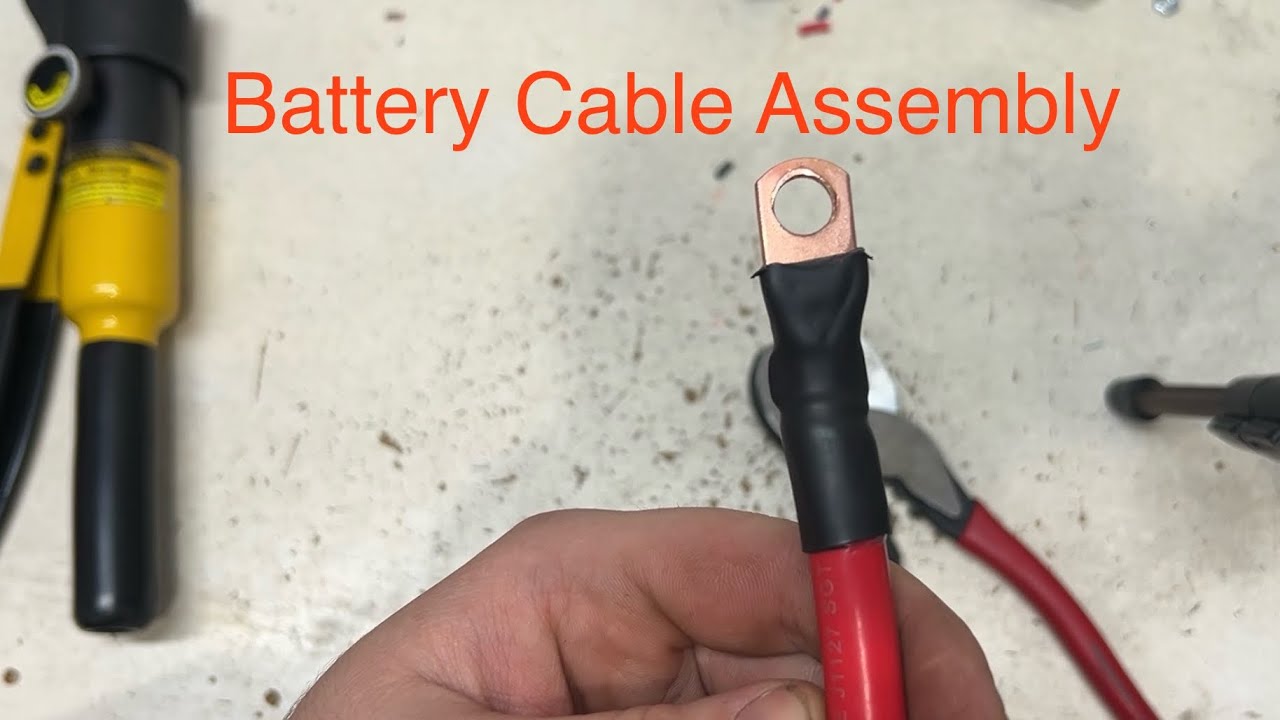

Battery cables are important components in the electrical system that function to transmit power from the battery to various devices such as vehicle starters, alternators, inverters, and other power systems. Without quality battery cables that meet the needs, the electrical system will not work optimally, and can even experience failures that risk damaging the device or vehicle.
The power efficiency and safety of the electrical system definitely affected by the battery cables you choose. Wrong cables can cause overheating, power loss, and even short circuits that can potentially lead to dead battery which may cause damage batteries as well as the other electronic devices. For that reason, knowing the basics such as types, how to use, and maintenance of battery cables is important to obtain optimal performance.
In this article, we will discuss the different types of battery cables, how to choose the right cable for your needs, as well as their applications in various industries. In addition, we will also provide maintenance tips that can extend the battery life cycle, the life of battery cables, and avoid common mistakes which often occur in their use.
What Are Battery Cables?
In a system, battery cables are used to connect the batteries to various electrical components. Battery cables are an important component in vehicles, industrial equipment, and also solar power systems and power battery solution since they function as the main channel which carries electric current from the battery to other devices such as alternators, starters and other electrical systems.
Since the battery cables are usually made of copper or aluminum, they are protected by an insulating layer to prevent them from heat, moisture, or physical damage.
To match with the power requirements and environmental conditions that make sure optimal performance, the size and type of battery cables used must be adjusted.
These are the main roles of battery cables in electrical systems:
- Directing power from the battery to other electrical components. For example vehicle ignition systems, starter motors, or inverters in solar power systems.
- Maintaining the efficiency of the electrical system, to make sure that the electric current flows smoothly.
- Prevent the power loss or short circuits which can damage batteries.
With good quality battery cables, the electrical system will work optimally, and user may not experience failures that risk damaging the device or vehicle.
Why is Choosing the Right Battery Cables Important?
Since battery cables is an essential component to ensure optimal performance of the vehicle or electrical equipment, thus it needs to be selected properly, as well as check the battery fuse.
Efficient power delivery from the battery to the drive system and auxiliary components of the vehicle which giving result of efficient vehicle operation will be efficient if using good quality battery cables.
Using poor quality cables can give you various risks. For example fire or electric shock. This can occur due to the lack of protection against unstable voltage and electric current, which can cause damage to the device or even fire.
Additionally, unsuitable cables may lead to loose or unstable connections, increasing the risk of short circuit, sparks, or even fire.
Therefore, the selection of proper and quality battery cables is essential not only to ensure optimal performance but also safety of the vehicle or electrical equipment.
Efficiency and durability of the cables in conducting electricity determined by the selection of conductor materials in battery cables. The two main materials used in battery cables are copper and aluminum.
Types of Battery Cables
Copper Battery Cables
Compared to aluminum, copper battery cables have very high electrical conductivity which resulting electric current to flow more efficiently in many applications. Thus this makes users prefer copper battery cables.
Advantages:
- Durable: Not easily oxidized and corroded, especially if coated with additional protective materials.
- Conductivity: Reduces electrical resistance, increases power efficiency which will known by implmenting battery test.
- Flexible: Copper is more elastic, making it easier to install in tight spaces or applications with a lot of movement.
Disadvantages:
- Higher price: Production costs are higher compared to aluminum.
- Heavier: It can be a hindrance for applications that require lightweight.
Aluminum Battery Cables
Aluminum battery cables are cheaper and lighter compared to copper, thus they are considered as the alternative choice.
Advantages:
- Lighter: Facilitates installation on vehicles or devices that require low weight.
- More affordable price: A more economical choice compared to copper cables.
Disadvantages:
- Lower conductivity: A larger cable size is required to transmit the same power as a copper cable.
- More susceptible to oxidation: Aluminum rusts faster than copper, especially in humid environments.
Application of Battery Cables in Various Industries
Motor Vehicles
To connect the battery and the vehicle’s electrical system including the starter, lights, audio, and other systems, battery cables are needed.
The quality of the cable greatly affects the performance of the vehicle especially in distributing enough electric current to start the engine.
Renewable Energy Systems
Battery cables play an important role connecting energy storage batteries with inverters and electricity distribution systems.
Extreme weather resistant insulation is needed to make sure long-term safety and durability.
Industrial and Heavy Equipment
To support large electrical power in heavy equipments uch s generators, forklifts, and mining trucks, high capacity battery cables are used.
The cables must have a high capacity to handle heavy loads and continuous use, as well as extra durability which is required in harsh working environments.
Marine and Recreational Vehicles
High humidity, salt water corrosion, and extreme temperatures are the main challenges in the marine environment.
Thus the battery cables need more protective coatings to avoid corrosion and performance degradation.
Meanwhile, flexible yet strong battery cables are needed to support electrical systems while on the move for RVs.
Battery Cables Maintenance Tips
Taking care of battery cables is very important to make sure that the electrical system continues to run safely and optimally.
Periodically Clean the Battery Cables Connector
Corrosion
Corrosion of the battery cables connector can cause the electrical system to work less efficiently. This corrosion is shown by the appearance of white or green crust around the battery connector.
Clean the Connector Safely
First, make sure the battery is off before cleaning to avoid the risk of electric shock. To clean the connector, use a wire brush, a clean cloth, and a special cleaning solution (for example a mixture of baking soda and water).
Keeping Connections Tight
Loose Connections
An unstable electric current can occur which resulting in a difficult vehicle start or even a short circuit when the connection loose.
Make sure the connections are firm and stable
A suitable wrench or screwdriver to tighten the connector securely without damaging the bolt threads can be used to securely fastened he cable terminals and make sure that the fastening bolts are not loose.
Replacing Damaged Battery Cables
Signs that battery cables should be replaced
Cracks in the insulation, excessive rust on the connectors, or inflexible cable are several signs that the cables need to be replaced.
Risks of using damaged battery cables
Decrease in power efficiency, the electrical system does not function properly, and even risks causing a fire due to a short circuit are several impact that can cause by using damaged battery cables.
Proper Storage and Installation of the Battery Cables
Extreme Temperatures and Harmful Chemicals
Store cables in a dry and cool place, put them away from direct sunlight and chemicals that can damage cable insulation.
How to properly install the cable to avoid short circuit
Ensure that the wiring matches the polarity of the battery and is well insulated. Avoid cable contact with metal parts that may cause a short circuit.
With regular and proper maintenance, battery cables can last longer and maintain optimal electrical system performance.
Conclusion
In the electrical system of vehicles and industrial machinery, battery cables are one of the most important parts.
Without quality and well-functioning battery cables, the electricity supply from the battery to various components can be disrupted. If the cables are damaged, the vehicle may be difficult to start or even experience a complete failure. Therefore, knowing the importance of battery cables and how to maintain them is important to make sure the optimal vehicle performance.
Immediately replace battery cables with high-quality ones to make sure the safety and efficiency of electrical power when the cables are damaged.
Who We Are
With over 17 years of experience, TYCORUN is a leading lithium battery supplier committed to driving innovation and development of battery technology. Our diverse product range includes two/three/four-wheeled power batteries, energy storage systems, one stop battery swap systems, inverters, and electric motorcycles. These high-quality solutions are trusted in Europe, the Middle East, and Africa.
We provide customized battery services, from cells to complete systems, and holds certifications like ISO9001, CE, TUV, and UL. TYCORUN has developed solid-state batteries for better performance and uses advanced BMS algorithms for safety and longer life.
TYCORUN’s global reach is strengthened through our strategic partnership with Ganfeng, a top-five Chinese battery manufacturer. This collaboration offers us professional technology and production support. We fully manage Ganfeng’s overseas battery business and have collaborated to mass sell swappable, power, and energy storage batteries to Thailand, Dubai, Egypt, South Africa, Saudi Arabia, etc.
The company provides customized battery services, from cells to complete systems, and holds certifications like ISO9001, CE, TUV, and UL. TYCORUN has developed solid-state low-temperature batteries for better performance in cold conditions and uses advanced BMS algorithms for safety and longer life. It also prioritizes sustainability with low-pollution materials and eco-friendly production.

A battery case is an important component of a battery that functions to maintain the safety and performance of the battery. In this article, we will take a closer look at the uses and functions of a battery case, the different types of battery cases, and how to maintain a battery case to extend battery life.

A battery fuse is your first line of defense against electrical fires. This guide breaks down fuse types, a step-by-step sizing formula, wire ampacity and AIC charts, and a safe replacement walkthrough — for cars, solar systems, and LiFePO4 battery banks.

How to connect a battery depends on your needs—use a series connection to increase voltage or a parallel connection to increase capacity. In this article, we’ll guide you through batteries in series methods to help you power your application efficiently.
Authors
-
View all postsWith over five years of experience in writing, I have honed my skills in crafting compelling content across various topics. Currently, I am deeply interested in exploring the intersections of technology, sustainability, and renewable energy. My passion lies in understanding how these fields shape the future and communicating complex ideas in a way that is both engaging and accessible. Through my writing, I aim to bridge the gap between innovation and awareness, inspiring others to embrace sustainable solutions for a better world.
-
View all postsMeg is a battery engineer with 10+ years of experience in the energy storage industry. She holds a B.S. in Electrical Engineering and previously worked as an R&D engineer at a lithium-ion battery manufacturer, where she focused on battery management systems (BMS), charging algorithms, and life-cycle testing for lead-acid, AGM, and lithium chemistries. She has contributed to the development of battery maintenance technologies used in commercial products. Meg now provides technical review for energy storage content to ensure accuracy, safety, and practical value for readers.





